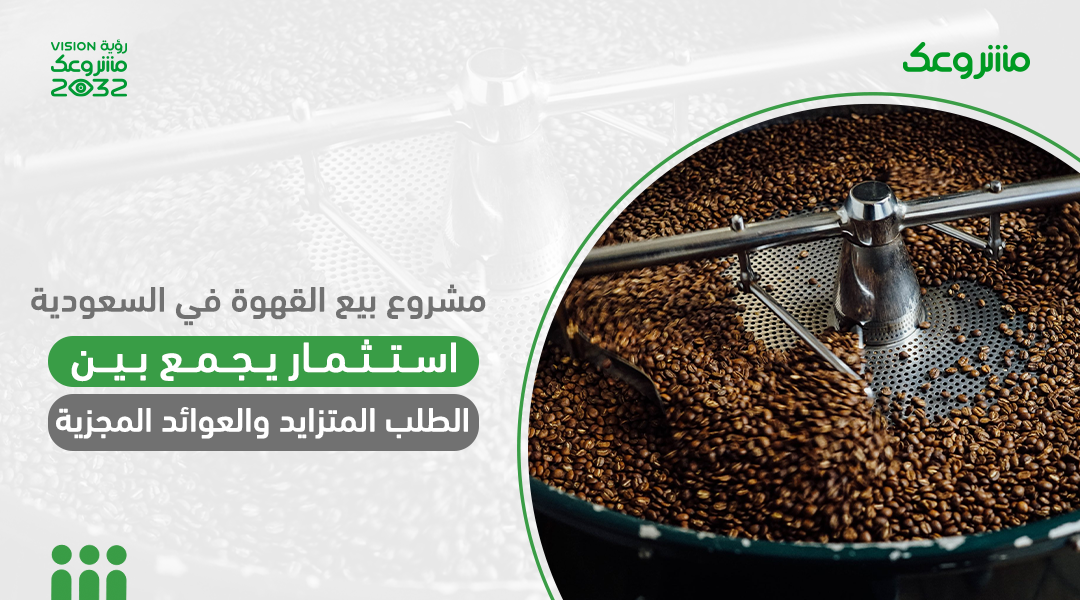
A coffee retail project is considered one of the most attractive opportunities in the beverage sector, driven by the rapid growth and strong demand it receives from different customer segments. Coffee is no longer merely a traditional daily beverage; it has become a complete experience with a distinct character that reflects lifestyle and personal taste, making it one of the most sought-after and profitable products in modern markets.
With the widespread growth of café culture and the increasing number of specialized coffee brands, entrepreneurs have strong investment opportunities to explore through various business models, ranging from small kiosks to fully integrated cafés offering innovative beverages that meet evolving consumer preferences.
The project is characterized by high flexibility and strong growth potential, along with its ability to build a powerful brand identity in a continuously developing and increasingly competitive market. Therefore, understanding the project’s requirements and essential steps is the true foundation for launching a successful business capable of achieving long-term sustainability and profitability.
Read Here: 20 Small Business Ideas That Can Generate Huge Profits in 2026
A coffee retail project is a business activity focused on preparing and selling various types of coffee beverages, such as espresso, cappuccino, latte, and Arabic coffee. It can operate through a traditional café, a small kiosk, a mobile coffee cart, or a ready-to-operate sales outlet.
The project is based on meeting the growing demand for coffee as a daily product that has become an essential part of the lifestyle of a wide range of consumers. It typically involves preparing a suitable location, providing coffee-making equipment, selecting high-quality coffee beans, and offering customers a distinctive experience in terms of taste, service, and atmosphere.
This type of project is considered a popular investment opportunity due to its high demand and its potential for easy development and expansion.
Yes. Global estimates indicate that the global coffee market was valued at approximately USD 256.53 billion in 2025, with the market expected to maintain strong momentum in 2026 before gradually increasing to approximately USD 402.21 billion by 2035. This reflects significant and sustained expansion in this vital sector.
The market is also expected to record a compound annual growth rate (CAGR) of approximately 4.6% from 2026 to 2035. This confirms the strength of growing global demand for different types of coffee, whether traditional or specialty, as coffee has become an essential part of daily consumption habits.
These indicators demonstrate that a coffee retail project represents a promising investment opportunity with strong potential for profitability and long-term sustainability, supported by a broad consumer base and diverse coffee-serving formats across global markets.
Read here: Coffee Market Report in the Kingdom of Saudi Arabia
A coffee retail project is considered a promising investment opportunity that combines multiple success factors, making it an attractive option for both beginners entering the business world and entrepreneurs seeking profitable investment opportunities. The key advantages include:
To ensure a successful and professional launch of a coffee retail project, it is essential to provide a complete set of basic equipment and tools that contribute to delivering high-quality products and creating a distinctive customer experience. Selecting the right equipment is one of the key factors affecting operational efficiency, service speed, and customer satisfaction. The main requirements include:
The type and quantity of equipment required vary depending on the size of the project, whether it is a small kiosk or a fully integrated café. However, investing in high-quality equipment has a direct impact on coffee taste, service efficiency, and the overall customer experience.
Please read here: Read here: Discover the Best Small Project That Fits Your Resources
The cost of a coffee retail project varies significantly depending on several key factors, primarily the size of the project, the types of beverages and services offered, and the quality of the selected equipment and appliances. These costs are divided into several main categories that collectively form the project’s financial structure:
This category includes the essential equipment required to operate the project, foremost among them the coffee machine, which is the backbone of the business, along with a coffee grinder to ensure high-quality fresh grinding, electric blenders for preparing cold beverages, and refrigerators for storing milk and fresh ingredients. It also includes measuring tools to maintain beverage consistency and a point-of-sale (POS) system to manage sales professionally and efficiently, ensuring smooth workflow throughout the project.
This category covers all the essential ingredients required to prepare beverages, including different types of coffee beans, milk and dairy products, flavorings and syrups, as well as sugar, cups, lids, and serving supplies. The cost varies depending on product quality, consumption levels, and daily demand. Costs may decrease relatively when purchasing in larger quantities, making careful supplier selection a strategic factor in improving profit margins.
This category covers preparing the appropriate location for the coffee retail project, whether it is a small kiosk or a fully integrated café. It includes designing the preparation and serving areas in a practical manner, providing proper ventilation and suitable lighting to enhance the customer experience, as well as installing tables and chairs or an external service window. Attention to décor and visual identity is also important for attracting customers and creating a professional impression of the business.
This category includes electricity and water expenses required for daily equipment operation, in addition to regular maintenance of coffee machines and other equipment to ensure consistently high performance. It also covers the replacement of damaged or consumable components, such as water filters and grinding equipment. This is an essential expense for maintaining product quality and ensuring uninterrupted operations, preventing unexpected downtime that could negatively affect sales.
This is one of the key elements contributing to the project’s success. It includes developing the brand identity, such as the logo and color scheme, as well as managing marketing campaigns across social media platforms. It also covers promotional offers, professional product photography, and building a strong digital presence that helps attract customers and increase sales, particularly in a market that relies heavily on visual appeal and first impressions.
This category includes the salaries and wages of project employees, such as baristas and customer service staff, in addition to management personnel responsible for organizing daily operations and monitoring inventory and sales. These costs increase as the project expands and customer demand grows, requiring effective management to ensure fast, high-quality service and maintain customer satisfaction.
Steps for Establishing a Café Project in Saudi Arabia and the Key Secrets to Standing Out and Achieving Profitability
Please read here: Coffee grinding project: A detailed guide to starting a profitable project from scratch
Read here: A detailed guide to starting a coffee roasting and grinding project
| Challenges | How to Overcome Them |
|---|---|
| High competition in the coffee market | Offer higher-quality beverages, focus on a distinctive brand identity, and provide a unique customer experience. |
| Fluctuating raw material prices | Work with reliable suppliers and purchase in bulk to reduce costs. |
| Low customer demand during the initial stage | Implement strong marketing campaigns and offer promotions and discounts to attract customers. |
| Operational errors and inconsistent beverage quality | Provide professional staff training and establish standardized coffee preparation procedures. |
| High operating costs | Manage expenses carefully and minimize waste of ingredients and consumable supplies. |
| Choosing an unsuitable location | Conduct a thorough location study before signing a lease, based on customer traffic and population density. |
| Weak digital marketing | Leverage social media platforms and consistently create engaging content. |
| Work pressure during peak hours | Organize the team and distribute tasks effectively to ensure fast and efficient service. |
Read here: How to start investing in successful small projects in Saudi Arabia?
The growing demand for coffee retail projects in the Saudi market was a strong motivation for me to start this business. However, at the beginning, I faced several challenges that affected the speed of implementation, most notably the difficulty of accurately planning the project and determining the appropriate capital required, in addition to financing challenges related to covering equipment and operating costs.
I therefore decided to seek the expertise of Mashroo3k Consulting. Their team professionally assisted me in preparing a comprehensive feasibility study covering all marketing and technical aspects, including equipment and labor requirements, as well as the financial and administrative aspects that helped me gain a clearer and more accurate understanding of the project.
Their role was not limited to preparing the study. They also provided practical solutions to the financing challenge and guided me step by step until I was able to obtain the appropriate financing from the Social Development Bank.
Today, thanks to God and the comprehensive support provided by the Mashroo3k Consulting team, the project is fully operational and has achieved clear stability and growth, becoming an investment built on solid foundations and a well-planned understanding of the market.
Yes, a coffee business is considered one of the most successful and widespread ventures in the food and beverage sector, driven by the high and growing demand for coffee as an essential part of the daily routine for various customer segments.
The success of the project largely depends on the quality of the beverages offered, the careful selection of the location, and the ability to provide customers with a distinctive experience in terms of service and atmosphere. The project’s flexibility and the ability to start with a relatively small amount of capital and expand gradually also provide strong potential for long-term sustainability and growth in a continuously evolving market.
Read Here: Best Successful Small Projects for Youth in 2026
Yes, selling coffee beans is considered a business with good economic potential, as coffee enjoys consistent demand in various forms, whether as whole beans, ground coffee, or coffee supplied to cafés.
The level of profitability depends on product quality, sourcing and storage methods, and the efficiency of managing operating costs. Diversifying sales channels, such as direct sales or supplying cafés and retail stores, can also increase revenue and enhance the potential for achieving stable profits over the long term.
The cost of opening a coffee shop varies depending on several factors, such as the geographic location, project size, level of equipment required, and the type of brand identity to be implemented. The project may start with a relatively low cost in the case of small kiosks or points of sale, while costs increase significantly for full-service cafés located in high-traffic areas.
Costs typically include rent, interior design and fit-out, essential equipment such as an espresso machine and coffee grinder, as well as initial supplies, staff salaries, operating expenses, and marketing costs. Therefore, it is always recommended to prepare an accurate feasibility study to determine the appropriate investment cost and ensure the best possible return on the project.
The best types of coffee to sell vary according to customer preferences. However, several options are among the most popular and widely consumed in the market, including espresso, which serves as the foundation for most coffee beverages, and Americano, known for its lighter taste and ease of consumption.
Latte and cappuccino are also highly popular due to their balanced flavors, while mocha combines coffee and chocolate, making it suitable for customers who prefer distinctive flavors. Cold coffee beverages such as iced latte and iced Americano are also becoming increasingly popular, particularly in hot weather, making them an important addition to the menu of any successful coffee business.
The best location for a coffee business is one that combines high daily foot traffic with a consistent presence of the target customer segment. Suitable locations include areas near universities, schools, administrative offices, and companies, where demand for coffee is frequent and consistent.
Shopping malls, entertainment venues, and gas stations can also be successful locations due to the continuous flow of visitors throughout the day. Ideally, the location should be easily accessible and clearly visible to passersby, with convenient parking or quick-stop access, as coffee businesses often depend on quick purchases and repeat visits.
The success of a coffee business depends on several key factors, most importantly offering high-quality coffee that ensures customer satisfaction and repeat purchases, along with selecting a strategic location that generates consistent customer traffic.
A diverse beverage menu, appropriate pricing, and fast service are also important factors in increasing competitiveness. Maintaining cleanliness and developing a distinctive brand identity help strengthen customer trust, while effective social media marketing contributes to increasing brand awareness and attracting new customers.
With effective cost management and continuous monitoring of market needs, the business can achieve sustainable growth and stable profitability over the long term.
A coffee business can be considered one of the most promising investment opportunities, combining strong demand with the potential to generate attractive returns when properly planned and managed. The success of this business does not depend solely on the quality of the coffee served; it also requires selecting the right location, understanding customer needs, and implementing effective marketing strategies that support sustainable growth and expansion.
With an accurate feasibility study and efficient management, a simple business idea can develop into a strong brand with a solid presence in the growing coffee market. If you are looking for a business that combines passion with profitability, a coffee business could be your next step toward success.

Contact Us to Request a Coffee Business Feasibility Study
The kebab restaurant project is one of the food-service ventures that combines strong demand for grilled meals with the opportunity to target a diverse customer base, including individuals, families, and lovers of traditional Middle Eastern cuisine. With growing competition in the restaurant sector, however, the project’s success is no longer determined by food taste alone. […]
Read moreA children’s toy store project is not limited to selling toys; it is built on understanding what attracts children and what families look for when choosing products that combine entertainment and educational value. With the wide variety of educational toys, skill-development games, recreational toys, and gifts available, the store has opportunities to meet the needs […]
Read moreA residential complex project is no longer simply an investment in a collection of real estate units. It has evolved into an integrated development model that combines comfortable living, diverse services, and long-term investment value. As cities expand and residents’ needs evolve, demand is growing for residential complexes that offer a comprehensive environment suited to […]
Read moreThe veterinary clinic project comes at a time when animal care is no longer limited to treating illnesses or injuries, but has expanded to include health monitoring, vaccinations, routine checkups, and care for both pets and livestock. However, many animal owners face challenges in accessing specialized veterinary services that combine prompt response, high-quality care, and […]
Read more
خصم 25% على خدمات مشروعك استفد من العرض الآن، فالفرصة متاحة لفترة محدودة فقط
سجّل بياناتك واحصل على خصم 25% الآن


