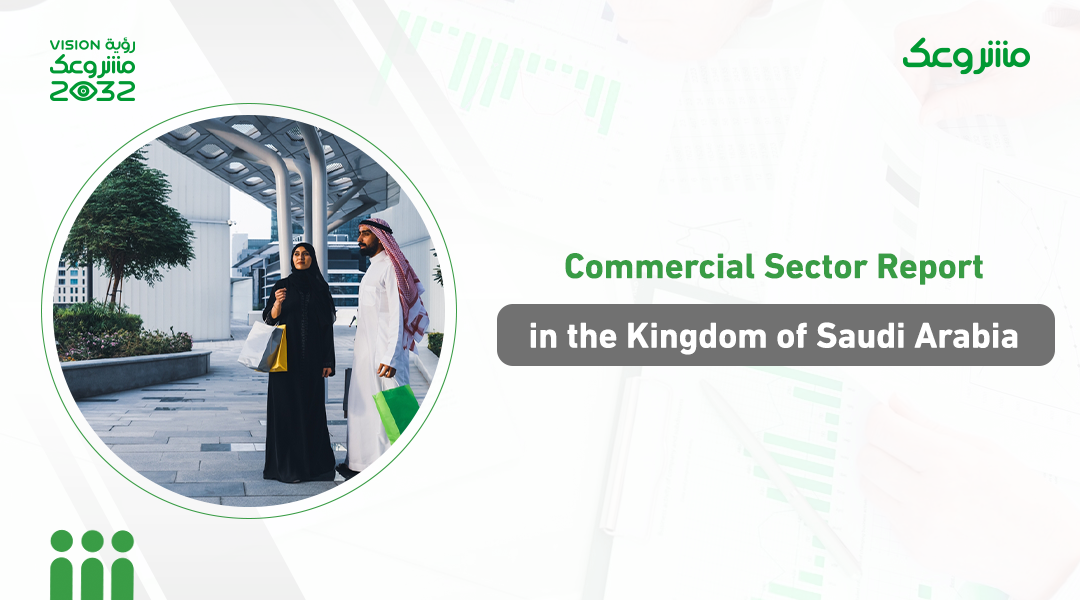
The commercial sector in Saudi Arabia has witnessed a qualitative transformation in recent years, marked by profound strategic shifts and tangible achievements that have reinforced the Kingdom’s position as an attractive investment destination for both local and foreign investors. This sector is considered one of the most prominent non-oil economic drivers, directly and significantly contributing to the GDP while providing a supportive investment environment aligned with the goals of sustainable growth and development.
As the Kingdom strives to diversify its economy and reduce dependence on oil revenues, the commercial sector emerges as a cornerstone in achieving Saudi Vision 2030, which aspires to build a more diversified, resilient, and globally competitive national economy. The sector continues to play a pivotal role in fostering investment partnerships, opening new horizons for businesses and entrepreneurial initiatives, and reflecting the Kingdom’s commitment to improving the investment climate, developing economic and logistical infrastructure, and strengthening its position as a leading commercial and investment hub regionally and globally.
The commercial sector is one of the main pillars of the economy, encompassing all activities related to the exchange of goods and services between individuals and institutions, both locally and internationally. It serves as a vital link between producers and consumers through buying, selling, and distribution operations that ensure the flow of products to targeted markets.
The sector includes both domestic trade (within national borders) and foreign trade (imports and exports), each playing a crucial role in driving economic growth. It actively stimulates economic development, generates job opportunities, and boosts GDP by activating market activity and balancing supply and demand—making it a fundamental element in building strong and sustainable economies.
In 2023, the Saudi Ministry of Commerce launched the National Commercial Sector Strategy as part of Vision 2030 goals, aiming to enhance the sector’s role as a main driver of sustainable economic growth.
The strategy focuses on stimulating sector growth and increasing its contribution to the national economy by developing a competitive business environment, improving market efficiency, and supporting innovation and entrepreneurship.
It also aims to enable digital transformation, enhance transparency and trust, develop commercial infrastructure, attract local and foreign investments, and create high-quality jobs.
Main objectives include:
The commercial sector is one of Saudi Arabia’s key economic drivers, offering vast opportunities to generate profits and stimulate economic growth, while playing a central role in the Kingdom’s comprehensive development path.
It significantly contributes to diversifying income sources and strengthening the non-oil economy, accounting for 8.8% of non-oil GDP—reflecting its strategic weight within the national economic structure.
It is also one of the largest employment-generating sectors, particularly in wholesale and retail trade, e-commerce, and franchising, helping create sustainable jobs and support Saudization efforts.
Additionally, it serves as an ideal environment for the growth of small and medium-sized enterprises (SMEs)—a key pillar of Vision 2030—and plays a role in enhancing international trade and increasing exports by supporting market openness and improving the global competitiveness of Saudi products.
The sector also leads the digital transformation drive, as Saudi Arabia has seen a significant boom in e-commerce—one of the fastest-growing sectors—further cementing the Kingdom’s position as a smart and advanced commercial hub on the global economic map.
One of the most vital economic sectors in the Kingdom
Saudi Arabia is one of the largest commercial hubs in the Middle East and North Africa and has the largest consumer market in the Gulf region, with its population representing over 60% of the region’s total—boosting demand for products and services.
High purchasing power and income levels
The Kingdom enjoys high purchasing power, which increases disposable income and drives demand for wholesale and retail trade, especially alongside rising living standards.
Expected growth in retail and wholesale trade
Vision 2030 targets support this sector’s growth through rising household incomes, an expected 150 million tourists by 2030, and the development of new cities planned to become global commercial centers.
Rising GDP per capita
GDP per capita rose to 29.82 thousand SAR in Q2 2022, compared to 20.62 thousand SAR in the same period of 2021, reflecting improved economic performance and greater consumer spending power.
Significant growth in e-commerce
COVID-19 accelerated the shift toward e-commerce, with increased reliance on digital platforms for buying and selling. In 2022, the number of e-commerce users reached 22.03 million, up 2.79% year-on-year. Internet penetration covers around 99% of the population. This shift has transformed consumer behavior, laid a strong foundation for sustainable digital economy growth, and positioned the Kingdom as one of the fastest-growing e-commerce markets in the region.
Widespread use of social media
There were 29.10 million social media users in Saudi Arabia as of January 2023, representing 79.3% of the population, boosting opportunities for digital marketing and online trade.
Promising investment opportunities
The Saudi government has launched several programs and initiatives to develop the economy and empower the private sector, including the Financial Sector Development Program and the National Transformation Program to improve infrastructure, enhance the business environment, and attract investments.
The commercial sector makes a significant contribution to Saudi GDP. The value of wholesale, retail, restaurants, and hotels activities reached about SAR 340 billion by the end of 2022—an 8.67% growth compared to 2021.
These activities accounted for 19.48% of total non-oil GDP in 2022. Between 2017 and 2022, the sector contributed an average of 19.70% annually to non-oil GDP, reflecting its stability and structural importance.
Future growth is expected, driven by the Kingdom’s economic diversification strategy under Vision 2030, focusing on tourism, entertainment, financial services, financial inclusion, transaction automation, and the adoption of advanced technologies to accelerate e-commerce and improve the commercial business environment—further cementing the sector as a cornerstone of sustainable growth.
Strengths
Weaknesses
Opportunities
Threats

To communicate and learn more about Mashroo3k company and its services
The kebab restaurant project is one of the food-service ventures that combines strong demand for grilled meals with the opportunity to target a diverse customer base, including individuals, families, and lovers of traditional Middle Eastern cuisine. With growing competition in the restaurant sector, however, the project’s success is no longer determined by food taste alone. […]
Read moreA children’s toy store project is not limited to selling toys; it is built on understanding what attracts children and what families look for when choosing products that combine entertainment and educational value. With the wide variety of educational toys, skill-development games, recreational toys, and gifts available, the store has opportunities to meet the needs […]
Read moreA residential complex project is no longer simply an investment in a collection of real estate units. It has evolved into an integrated development model that combines comfortable living, diverse services, and long-term investment value. As cities expand and residents’ needs evolve, demand is growing for residential complexes that offer a comprehensive environment suited to […]
Read moreThe veterinary clinic project comes at a time when animal care is no longer limited to treating illnesses or injuries, but has expanded to include health monitoring, vaccinations, routine checkups, and care for both pets and livestock. However, many animal owners face challenges in accessing specialized veterinary services that combine prompt response, high-quality care, and […]
Read more
خصم 25% على خدمات مشروعك استفد من العرض الآن، فالفرصة متاحة لفترة محدودة فقط
سجّل بياناتك واحصل على خصم 25% الآن


