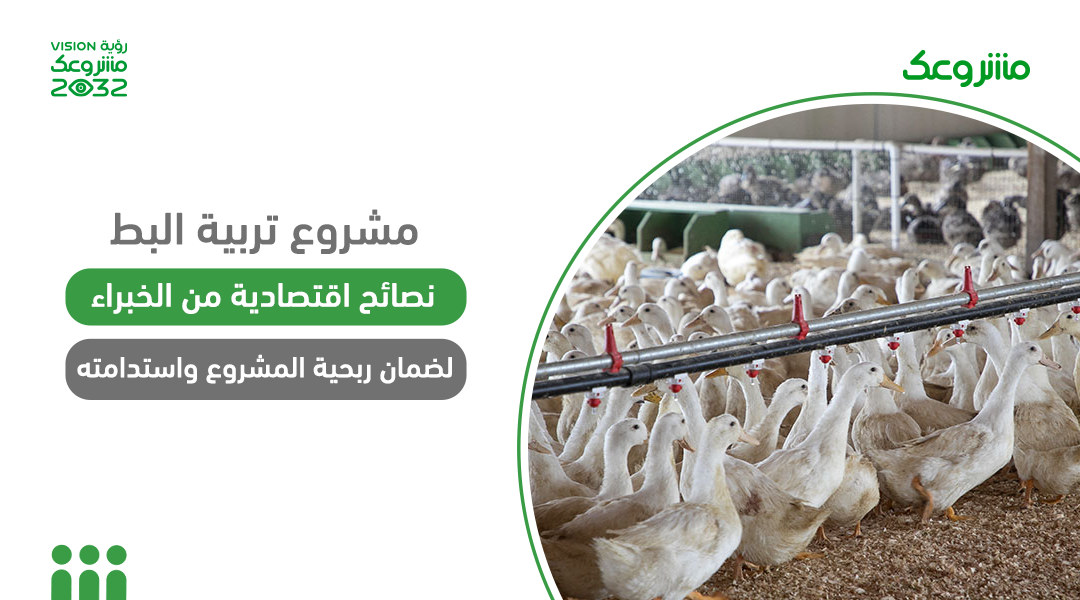
The duck farming project is considered one of the most promising investment opportunities in the agricultural sector, combining operational stability with attractive financial returns when implemented within a well-planned business model. Ducks are highly adaptable to various environmental conditions, grow quickly, and efficiently convert feed, which helps increase production efficiency and reduce operational risks.
The appeal of the project is not limited to the growing local demand for duck meat and eggs; it also extends to strategic expansion opportunities through direct supply contracts with restaurants, slaughterhouses, and food supply chains. Consequently, the project evolves from a traditional activity into an integrated investment with growth potential, where modern fattening systems, effective management, and careful planning enable stable profit margins over relatively short production cycles.
A duck farming project is an agricultural production activity carried out on a commercial scale in farms equipped with modern systems, aiming to produce duck meat and eggs for supply to markets, slaughterhouses, restaurants, and food supply chains. It is an organized agricultural investment that requires suitable infrastructure and specialized technical and financial management.
The project relies on selecting improved breeds with high growth rates, implementing precise feeding and healthcare programs, and efficiently managing production cycles and marketing. Thanks to the growing demand for duck products and their high feed conversion efficiency, the project represents a promising investment opportunity capable of generating stable financial returns and scalable growth when implemented according to a comprehensive feasibility study.
Yes, duck farming is considered a successful and profitable investment project, supported by statistical indicators showing steady growth in global and regional markets. The global duck meat market reached approximately $3.08 billion in 2024, rising to $3.27 billion in 2025, and is expected to continue growing to $5.97 billion by 2035, registering a compound annual growth rate (CAGR) of 6.2% from 2025 to 2035. This reflects promising and sustainable investment opportunities in this sector.
Please read here: Quail Farming Project: A Smart Investment with Returns Beyond Expectations
Read Here: Why Rabbit Farming is a Successful Agricultural Investment
What is the Cost of a Duck Farming Project?
To successfully establish a duck farming project, it is essential to accurately identify all potential expenses, whether initial investments or operational costs, to ensure effective management and achieve profitable returns in the short and long term. The main costs of the project include:
How to Start a Duck Farming Project
To start a commercial duck farming project, you should follow carefully planned steps to ensure success and sustainability, including:
| Market Analysis | Determine the demand for duck meat and eggs, study competitors, explore export opportunities |
|---|---|
| Target Audience | Restaurants, hotels, local markets, food processing factories |
| Expected Demand | Estimate the quantity of meat and eggs needed to cover the target market |
| Competitive Advantage | Fresh products, high quality, breed variety, competitive prices |
| Marketing Strategy | Direct sales, online channels, distribution companies |
For more information, read here: Marketing Feasibility Study: Definition, Importance, How to Prepare It, and Key Tools
| Location and Area | Choose a suitable farm with water, electricity, and sufficient space for the duck houses |
|---|---|
| Rearing System | Cages, floor rearing, or water-based systems depending on the breed and project goal |
| Duck House Preparation | Build the pens, install heating and ventilation, set up cages and feeders |
| Breed Selection | Meat-producing, egg-laying, or dual-purpose breeds according to project objectives |
| Production Plan | Duck rearing cycle, feeding program, veterinary care, and vaccinations |
For more information, read here: 7 Key Elements of a Technical Feasibility Study for Projects
| Investment Costs | Land or rent, construction, equipment, licenses |
|---|---|
| Operating Costs | Purchase of ducks, feed, medicines and vaccines, labor, utilities |
| Expected Revenues | Meat sales, eggs, secondary products like feathers |
| Profitability Analysis | Expected profit margin, payback period |
For more information, read here: Financial Feasibility Study for Entrepreneurs (Definition, Objectives, and Components)
| Administrative Structure | Define responsibilities, required workforce, farm management |
|---|---|
| Daily Work Plan | Duck feeding, veterinary care, monitoring production and sales |
| Documents and Permits | Project registration, production permits, production and sales records |
| Expansion Strategies | Increase flock size, enter new markets, develop additional products |
10 Tips to Ensure the Success and Sustainability of a Duck Farming Project
5 Frequently Asked Questions About Duck Farming
These growth periods also depend on the type of feed and the implemented health care programs.
Balanced, high-protein feed is the ideal choice for fattening ducks, provided in three stages according to their changing nutritional needs:
The feed usually consists of a mix of yellow corn, soybean, and bran, with added essential minerals and vitamins. It is also recommended to supplement with moderate amounts of green feed (such as arugula or lettuce) to improve digestive health and increase feed conversion efficiency.
What is the Duck’s Preferred Food?
Ducks prefer energy- and protein-rich foods such as yellow corn, grains, and high-quality compound feed, along with nutritional additives that promote rapid growth and support overall health in a duck farming project.
In Conclusion
Duck farming represents a promising investment opportunity in the agricultural sector, combining fast capital recovery with high market demand. With careful planning and adherence to modern breeding and care practices, the project can yield stable financial returns, with potential for gradual expansion to meet growing demand. It provides a strong foundation for a sustainable production activity, leveraging real market opportunities and ensuring long-term continuity and success.

Contact Us to Request a Feasibility Study for a Duck Farming Project
The kebab restaurant project is one of the food-service ventures that combines strong demand for grilled meals with the opportunity to target a diverse customer base, including individuals, families, and lovers of traditional Middle Eastern cuisine. With growing competition in the restaurant sector, however, the project’s success is no longer determined by food taste alone. […]
Read moreA children’s toy store project is not limited to selling toys; it is built on understanding what attracts children and what families look for when choosing products that combine entertainment and educational value. With the wide variety of educational toys, skill-development games, recreational toys, and gifts available, the store has opportunities to meet the needs […]
Read moreA residential complex project is no longer simply an investment in a collection of real estate units. It has evolved into an integrated development model that combines comfortable living, diverse services, and long-term investment value. As cities expand and residents’ needs evolve, demand is growing for residential complexes that offer a comprehensive environment suited to […]
Read moreThe veterinary clinic project comes at a time when animal care is no longer limited to treating illnesses or injuries, but has expanded to include health monitoring, vaccinations, routine checkups, and care for both pets and livestock. However, many animal owners face challenges in accessing specialized veterinary services that combine prompt response, high-quality care, and […]
Read more
خصم 25% على خدمات مشروعك استفد من العرض الآن، فالفرصة متاحة لفترة محدودة فقط
سجّل بياناتك واحصل على خصم 25% الآن


