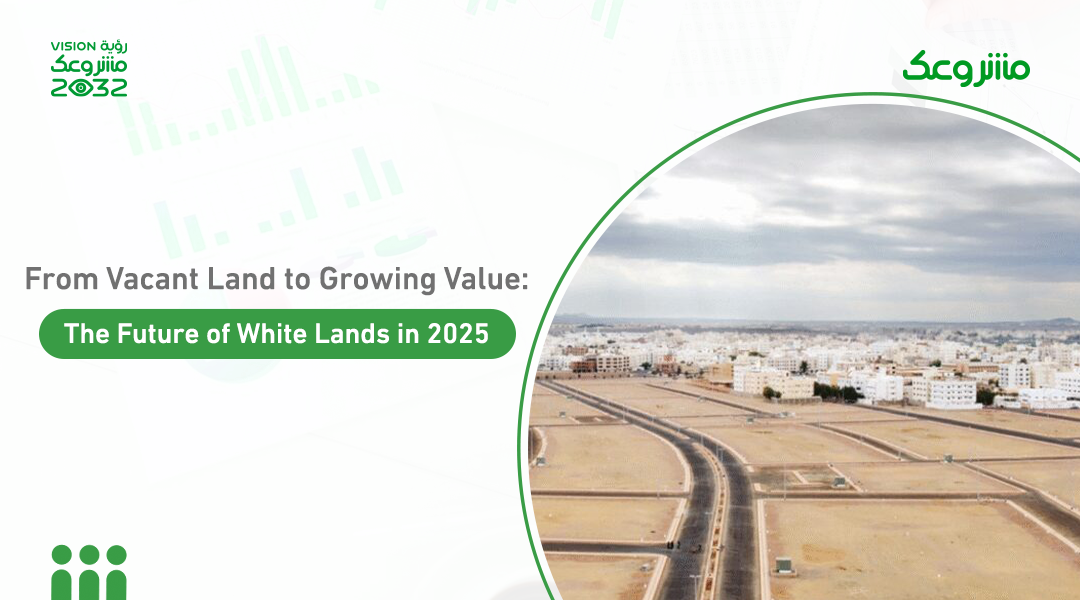
White lands are not merely vacant spaces within the urban fabric; they represent a strategic reserve with vast investment and development potential. Leaving them idle contributes to stagnation in the real estate market, drives up prices, and complicates ownership opportunities for citizens. On the other hand, developing them is a key factor in restoring balance between supply and demand and driving sustainable urban growth.
Based on this, the White Lands Fees System was introduced as an effective regulatory tool to break the cycle of land monopolization, encourage landowners to develop their properties, and support the objectives of the national housing program in line with Saudi Vision 2030.
This issue goes beyond the real estate dimension to represent a civilizational and strategic pillar that contributes to achieving social equity and promoting balanced, sustainable urban development. In this article, we explore its various aspects and its central role in shaping the future of the real estate market.
White lands are undeveloped plots within the urban boundaries of cities that have full access to infrastructure but remain vacant — with no residential, commercial, or investment construction. They are called “white” because they are empty and unused, making them vulnerable to monopolization or neglect, which disrupts market balance, increases prices, and reduces ownership opportunities.
The White Lands Fees System in Saudi Arabia was created as a strategic regulatory tool to address this issue by motivating owners to develop or sell their land, which helps revitalize the market, support housing and development plans, and achieve Vision 2030 goals for balanced and sustainable urban growth.
According to the executive regulations, the system is applied in four main stages:
Stage 1: Applies to undeveloped lands of 10,000 m² or more within designated urban boundaries.
Stage 2: Applies to developed lands of 10,000 m² or more, or to combined lands owned by one person within a single master plan exceeding this area.
Stage 3: Applies to developed or developable lands of 5,000 m² or more, or total lands owned by one person in a single city exceeding 10,000 m².
Stage 4: Applies to all combined lands exceeding 10,000 m² within one city.
📖 Read Here: The Executive Regulations of the White Lands Fees System
The system has been updated to raise fees up to 10% of the land value, applied according to priority tiers:
Saudi Arabia seeks to solve challenges facing the real estate market — especially unused white lands — through this system as a strategic tool to stimulate urban development and balance supply and demand.
Its positive impacts include:
Developing vast white land areas
Direct support for housing projects
System improvements for higher efficiency
Expansion in billing and registration
📖 Read Here: Off-Plan Sales — A New Vision Redefining the Real Estate Investment Market
This system is a key pillar in achieving Saudi Vision 2030 as it turns unused lands from a burden into a driver of growth and development by supporting the vision’s economic, social, and urban pillars:
As a result, the system has become a strategic cornerstone for achieving Vision 2030’s housing and urban development goals, by regulating the real estate market, boosting land and housing supply, supporting balanced development, improving quality of life, and building modern, vibrant, and fair cities.

For inquiries about white lands and key investment opportunities
The kebab restaurant project is one of the food-service ventures that combines strong demand for grilled meals with the opportunity to target a diverse customer base, including individuals, families, and lovers of traditional Middle Eastern cuisine. With growing competition in the restaurant sector, however, the project’s success is no longer determined by food taste alone. […]
Read moreA children’s toy store project is not limited to selling toys; it is built on understanding what attracts children and what families look for when choosing products that combine entertainment and educational value. With the wide variety of educational toys, skill-development games, recreational toys, and gifts available, the store has opportunities to meet the needs […]
Read moreA residential complex project is no longer simply an investment in a collection of real estate units. It has evolved into an integrated development model that combines comfortable living, diverse services, and long-term investment value. As cities expand and residents’ needs evolve, demand is growing for residential complexes that offer a comprehensive environment suited to […]
Read moreThe veterinary clinic project comes at a time when animal care is no longer limited to treating illnesses or injuries, but has expanded to include health monitoring, vaccinations, routine checkups, and care for both pets and livestock. However, many animal owners face challenges in accessing specialized veterinary services that combine prompt response, high-quality care, and […]
Read more
خصم 25% على خدمات مشروعك استفد من العرض الآن، فالفرصة متاحة لفترة محدودة فقط
سجّل بياناتك واحصل على خصم 25% الآن


