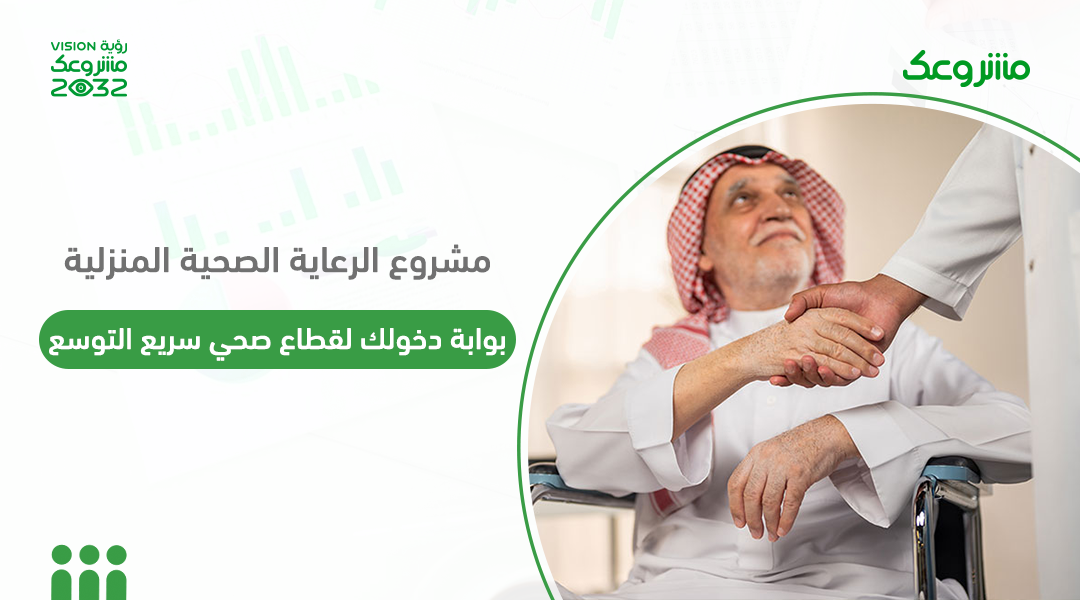
Home Healthcare Project: Your Gateway to a Rapidly Growing Healthcare Sector - Mashroo3k
Published24 Nov 2025 0 comments 352 Observation
Home Healthcare Project: Your Gateway to a Rapidly Growing Healthcare Sector

Home healthcare has emerged as one of the most attractive and sustainable investment opportunities in the healthcare sector in recent years. This growth is driven by a clear shift in consumer preferences toward receiving medical services in the comfort and safety of their homes—especially with today’s fast-paced lifestyle, the rise in the elderly population, the increase in chronic diseases, and the growing need for post-surgery or intensive care follow-up.
This model combines significant social and humanitarian value—by improving patients’ quality of life and reducing the burden on their families—with strong economic viability, supported by high annual growth rates in the global and local home healthcare market.

To make a confident and well-informed investment decision, it is essential to develop a comprehensive study that clearly defines the project scope, outlines the services offered (nursing, physiotherapy, respiratory care, wound care, chronic disease management, palliative care), and details all licensing requirements. The study must also assess operational costs and project profitability through break-even analysis, net profit expectations, and average revenue per case based on service packages. Furthermore, monitoring key performance indicators—such as customer satisfaction (NPS), patient retention, and renewal/referral rates—ensures accurate evaluation and reduced investment risks. This holistic approach provides investors with a clear, data-driven roadmap to enter this promising sector with confidence and sustainable profitability.

What Is a Home Healthcare Project?

A home healthcare project is an investment focused on delivering high-quality medical and nursing services directly to patients in their homes, eliminating the need for frequent hospital visits.
Services include daily nursing care, physiotherapy, medication management, routine checkups, and non-medical support—such as assistance with daily activities. These services are provided by a licensed and professional team, including nurses, physiotherapists, and visiting physicians.
Home healthcare improves recovery rates, enhances patient comfort, reduces long hospital stays, and lowers healthcare costs while maintaining high standards of care and safety.

Is a Home Healthcare Project Profitable?

Yes. Home healthcare is one of the most successful, fast-growing, and sustainable healthcare investments.
According to Grand View Research, the global home healthcare market value reached USD 459.29 billion in 2025, and revenues are expected to rise to USD 747.70 billion by 2030, with a CAGR of 10.21% from 2025 to 2030.
This strong upward trend reflects a clear shift toward home-based care as an efficient, cost-effective alternative, creating a lucrative opportunity for investors.

Read here: Healthcare Sector Report in the Kingdom of Saudi Arabia

Key Advantages of a Home Healthcare Project

  • Providing specialized medical care in the comfort and safety of the patient’s home.
  • Reducing long hospital stays and lowering traditional healthcare costs.
  • Offering flexible, customizable care plans aligned with each patient’s needs and routine.
  • Enhancing quality of life through medical and psychological support.
  • Helping patients maintain independence while receiving assistance with daily activities.
  • Creating new professional opportunities for medical and nursing staff.
  • Reducing pressure on hospitals and improving overall healthcare system efficiency.
  • Using digital tools for real-time monitoring, scheduling, and medical record updates.
  • Supporting families through emotional guidance and continuous communication.
  • Raising community awareness and educating families on how to manage health conditions.

Read here: Key Healthcare Sector Projects

How to Start a Home Healthcare Project

  • Conduct a thorough market study and assess community needs.
  • Prepare a detailed business plan including services, costs, and marketing strategy.
  • Obtain all required licenses from the Ministry of Health.
  • Legally register the business.
  • Recruit qualified and licensed medical and nursing staff.
  • Secure the necessary medical equipment and tools.
  • Implement a patient management and visit-scheduling system.
  • Build partnerships with hospitals and clinics for referrals.
  • Launch targeted marketing campaigns.
  • Regularly evaluate service quality and patient satisfaction.

Cost Components of a Home Healthcare Project

  • Licensing and regulatory fees
  • Office setup, medical equipment, and basic supplies
  • Staff salaries (medical, nursing, and operational)
  • Marketing and brand-building expenses
  • Monthly operational costs (rent, utilities, maintenance)
  • Training and upskilling programs for staff
  • Emergency budget for unforeseen costs
  • Patient management system (CRM / EMR)
  • Transportation and visit logistics

Feasibility Study Components

Financial Study

  • Estimating capital expenditures (licenses, office setup, equipment, software).
  • Calculating recruitment and training costs.
  • Determining monthly fixed and variable operating costs.
  • Estimating marketing and acquisition expenses.
  • Analyzing expected revenue streams (visits, packages, insurance contracts).
  • Preparing projected financial statements (income statement, cash flow, balance sheet).
  • Conducting break-even analysis and calculating IRR and NPV.
  • Assessing financial risks and preparing contingency plans.

Read here: The Financial Feasibility Study for Entrepreneurs (Definition, Objectives, and Components)

Marketing Study

  • Defining service scope (nursing, physiotherapy, chronic care, post-surgery care, elderly care, palliative care).
  • Conducting a full market assessment (demand, demographics, insurance coverage).
  • Competitor analysis (pricing, service quality, customer satisfaction).
  • Identifying target segments (elderly, chronic patients, children with special needs, post-operative patients).
  • Building a strong brand identity.
  • Developing an integrated marketing strategy.
  • Forming strategic partnerships with hospitals and insurance companies.
  • Launching professional referral programs and loyalty systems.
  • Tracking KPIs (CAC, conversion rate, retention, NPS).

Read here: The Marketing Feasibility Study — Its Definition, Importance, Preparation Method, and Key Tools

Technical Study

  • Preparing office and storage facilities.
  • Purchasing essential portable medical equipment.
  • Hiring licensed staff.
  • Implementing a digital patient management system (EMR, mobile app).
  • Developing clinical protocols and safety standards.
  • Conducting continuous training and simulation programs.
  • Introducing remote monitoring technologies.
  • Establishing maintenance procedures and medical inventory plans.

Read here: 7 Essential Elements that Form the Technical Feasibility Study for Projects

Administrative Study

  • Designing an organizational structure.
  • Developing SOPs for all operational processes.
  • Assigning qualified senior management.
  • Providing staff training and incentive programs.
  • Conducting regular performance evaluations.
  • Ensuring secure documentation and data protection compliance.
  • Establishing a dedicated CRM unit.
  • Ensuring full adherence to health regulations and licensing standards.
  • Creating business continuity and risk management plans.
  • Implementing internal governance and periodic audits.

Read here: Learn the Steps of a Feasibility Study and Ensure the Success of Your Investment Project

Key Requirements for Home Healthcare Centers in Saudi Arabia

(Summarized professionally and clearly)

  • Minimum space of 150 sqm.
  • Full compliance with the Saudi Building Code and health standards.
  • Approved designs and supervision by licensed engineering offices.
  • Proper interior layout with strict privacy standards.
  • Thermal insulation, electromagnetic protection, and structural safety for equipment.
  • Compliant sanitation systems and medical gas requirements.
  • Documented preventive maintenance plans.
  • Fire safety requirements and safe access for emergency vehicles.
  • Electrical connections complying with safety codes.
  • Clean site, safe materials storage, and chemical segregation.
  • Full accessibility for individuals with disabilities.

12 Tips for Ensuring the Success of a Home Healthcare Project

  1. Conduct proper market research.
  2. Hire qualified medical staff.
  3. Obtain all necessary licenses.
  4. Prepare a detailed operational plan.
  5. Maintain high standards of care.
  6. Use digital technologies effectively.
  7. Apply strong marketing strategies.
  8. Ensure sufficient working capital.
  9. Provide excellent customer service.
  10. Evaluate performance regularly.
  11. Prioritize human sensitivity and empathy.
  12. Follow international and local healthcare guidelines.

FAQ

What types of home healthcare services exist?
Specialized nursing, rehabilitation, elderly care, chronic disease management, palliative care, medical follow-ups, and post-operative care.

How is home healthcare delivered?
Through scheduled visits from qualified medical teams who assess the patient, create a personalized care plan, perform required procedures, and update medical records continuously.

What are the benefits of home healthcare?
Comfort, reduced hospital visits, lower costs, personalized care, and faster recovery in a familiar environment.

What are the main policies?
Compliance with MOH regulations, CBAHI standards, data privacy laws, infection control procedures, licensed staff, and accurate documentation in EMR systems.

What are the main healthcare specialties involved?
Nursing, general medicine, physiotherapy, occupational therapy, speech therapy, nutrition, and chronic disease management.

Conclusion

Home healthcare is more than a service—it is a high-value investment opportunity that meets rising demand and delivers both economic and social impact. With a clear feasibility study, proper licensing, and adherence to operational and medical standards, investors can build a profitable, long-term project that elevates patient care and aligns with modern healthcare trends.

For inquiries or to request a full feasibility study for a Home Healthcare Project, feel free to reach out


Similar Articles

How to Turn a Kebab Restaurant Project into a Distinctive Brand in Egypt?

The kebab restaurant project is one of the food-service ventures that combines strong demand for grilled meals with the opportunity to target a diverse customer base, including individuals, families, and lovers of traditional Middle Eastern cuisine. With growing competition in the restaurant sector, however, the project’s success is no longer determined by food taste alone. […]

Read more

Children’s Play Center Project in Saudi Arabia: How to Create an Experience That Attracts Children and Families?

A children’s toy store project is not limited to selling toys; it is built on understanding what attracts children and what families look for when choosing products that combine entertainment and educational value. With the wide variety of educational toys, skill-development games, recreational toys, and gifts available, the store has opportunities to meet the needs […]

Read more

Residential Complex Project in Saudi Arabia: An Investment That Creates Value Beyond Residential Units

A residential complex project is no longer simply an investment in a collection of real estate units. It has evolved into an integrated development model that combines comfortable living, diverse services, and long-term investment value. As cities expand and residents’ needs evolve, demand is growing for residential complexes that offer a comprehensive environment suited to […]

Read more

Veterinary Clinic Project in Egypt: A Promising Investment Opportunity in the Animal Care Sector

The veterinary clinic project comes at a time when animal care is no longer limited to treating illnesses or injuries, but has expanded to include health monitoring, vaccinations, routine checkups, and care for both pets and livestock. However, many animal owners face challenges in accessing specialized veterinary services that combine prompt response, high-quality care, and […]

Read more

Green Friday

فرصة لا تتكرر

GREEN FRIDAY

خصم 25% على خدمات مشروعك استفد من العرض الآن، فالفرصة متاحة لفترة محدودة فقط
سجّل بياناتك واحصل على خصم 25% الآن