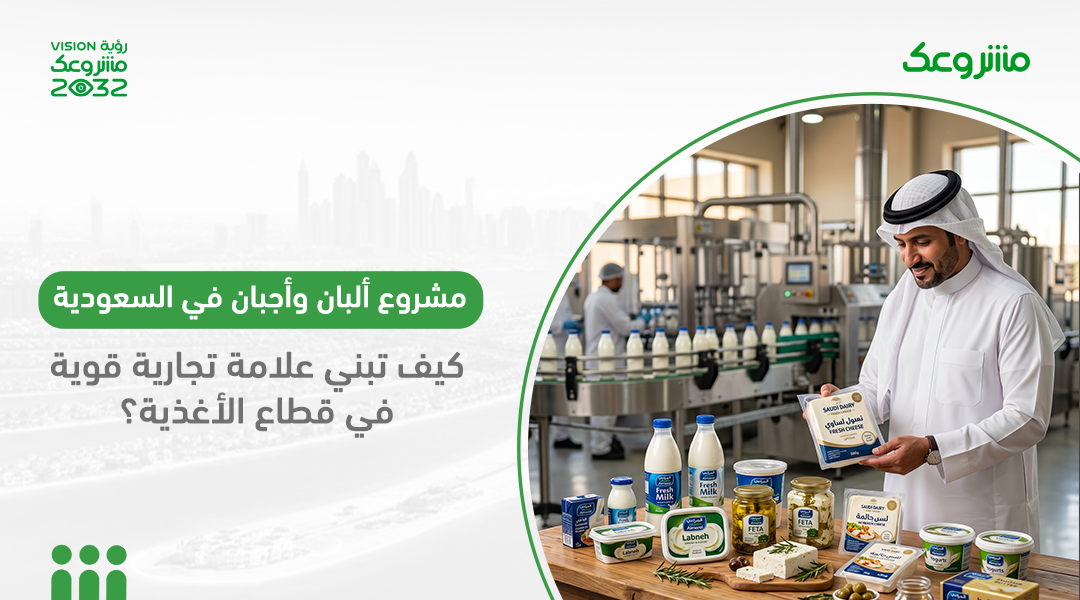
The dairy and yogurt project is no longer just a traditional activity in the food sector; it has become a promising investment opportunity whose profitability is growing day by day, driven by changing consumption patterns and increasing consumer awareness of food quality and origin. This has made dairy and cheese products an essential staple in every household. Amid this rising demand, the project now possesses the key components that ensure long-term success and sustainability. Its strength is not limited to demand alone, but also extends to the rich diversity of products that can be offered—from fresh milk and its derivatives to various types of cheese that cater to a wide and diverse range of customers. This variety gives project owners great flexibility for expansion and profit growth, and opens broad horizons for sustainable development, especially when high quality, competitive pricing, and a smart, integrated marketing strategy come together to attract customers and maintain their loyalty in an increasingly competitive market.
A dairy and yogurt project is an integrated industrial and commercial activity based on the production, processing, and sale of various dairy products such as fresh milk, cheese, yogurt, cream, and butter. The project relies on converting raw milk into ready-to-consume products using modern equipment and technologies that ensure quality and efficiency. It takes the form of a fully integrated factory that depends on advanced production lines and modern systems to transform raw milk into a wide range of products, with the ability to meet broad market demand efficiently and continuously. This project is considered a vital investment due to its direct connection to daily consumption, as almost no household is without dairy products, making it a relatively stable investment opportunity with consistent demand. With a commitment to quality, hygiene, and a strong marketing strategy, a dairy and cheese project can become a strong and sustainable source of income.
Yes, the dairy and cheese project is considered one of the promising projects with high economic feasibility, especially in light of the continuous expansion of the global dairy and cheese products market. The dairy market (including cheese) reached approximately USD 567.93 billion in 2026, reflecting the growing demand for global dairy products among consumers. Projections indicate that this growth will continue significantly, reaching USD 737.32 billion by 2033, meaning that the market is expected to achieve a compound annual growth rate (CAGR) of approximately 3.8% over the forecast period.
As for cheese products (both plant-based and animal-based), statistics indicate that the global market reached approximately USD 199.14 billion in 2025. The market is expected to grow strongly, reaching USD 208.66 billion by the end of 2026 and further expanding to USD 328.71 billion by 2034, achieving a compound annual growth rate (CAGR) of 5.85% over the forecast period. These indicators confirm that the dairy and cheese project holds strong profitability opportunities, supported by rising health awareness and increasing demand for fresh products; therefore, it is considered an attractive investment option for a wide range of investors.
Please read here: Best Projects in Saudi Arabia: Your Guide to Investment Opportunities Aligned with Vision 2030
The dairy and cheese project offers many advantages that make it one of the strongest investment opportunities today, especially in the Saudi market. The most important advantages include:
Read here: Industrial Sector Report in Saudi Arabia
The cost of a dairy and cheese project varies significantly depending on the factory size, level of equipment, location, and planned production capacity. The main costs include:
Read here: How to start investing in successful small projects in Saudi Arabia?
| Challenges | How to Avoid Them | Role of Mashroo3k Company |
|---|---|---|
| Variation in raw material quality (raw milk) | Selecting reliable suppliers and setting strict quality standards upon receipt | Identifying the best supply chains and setting quality inspection standards within the study |
| Inability to maintain the cold chain | Designing an integrated cooling system and continuous temperature monitoring | Defining optimal technical specifications for cooling and storage systems |
| High initial operating costs | Preparing an operational plan and reducing resource waste | Preparing an accurate feasibility study that distributes costs realistically |
| Strong market competition | Building a strong brand and focusing on product quality | Market analysis and competitor study to build a clear competitive advantage for the project |
| Lack of knowledge of health requirements for the project | Applying strict food safety standards within the factory | Clarifying legal and technical requirements for operation in Saudi Arabia |
| Difficulty in marketing products and building a distribution network | Developing an effective marketing and distribution plan across multiple channels | Preparing an integrated marketing plan suitable for the target market within the feasibility study |
| Fluctuating raw material prices | Creating a flexible financial plan and anticipating cost changes | Conducting financial sensitivity analysis to reduce price impact |
Read here: How to start successful Saudi projects from scratch?
For more information on municipal requirements for factories, click here.
I’m “Z. S.” from Dammam, and honestly, the idea of starting a dairy and cheese project had always been on my mind, especially because I noticed the market demand growing day after day. I kept telling myself: why not start a project with a promising future while also serving the local market? But once I got into the details, I discovered that the matter was much bigger than I had imagined.
The first challenge I faced was that I had no clear understanding of the technical requirements the project needed, whether in terms of equipment or operations. On top of that, financing became a major obstacle because the establishment and setup costs were much higher than expected. With all the pressure and delays, I eventually reached a point where I seriously considered canceling the entire project idea.
At that time, I came across a video by the experts at Mashroo3k Consulting Company, where they talked about supporting investors from the initial idea all the way to operation and profitability. I decided to give it a chance and contact them. From the very first meeting, I felt I was dealing with professionals who truly understood the Saudi market and knew exactly what investors needed.
They worked with me on a fully integrated and professionally prepared feasibility study. They explained every marketing, technical, financial, and administrative aspect in detail. Even the regulatory requirements and licensing procedures were presented in a simple and clear way. Most importantly for me, they helped me find the most suitable financing solution and guided me step by step through preparing all the documents and procedures until the project financing was approved by the Saudi Industrial Development Fund, which covered a significant portion of the project costs.
Today, thankfully, the factory is operating efficiently, production is running smoothly, and I can finally see the project that once existed only as an idea becoming a reality before my eyes. From my experience, I can confidently say that having a specialized consultant with you from the beginning is not an extra expense at all. On the contrary, it is one of the smartest decisions you can make, as it saves you time, prevents losses, and helps you start your project correctly from the very first step.
Read here: How do SME financing programs drive the economic transformation journey in the Kingdom?
The prices of dairy and cheese shop equipment vary significantly depending on several factors, most notably the shop size and the required level of تجهيز. In addition, the condition of the equipment—whether new or used—and whether it is locally manufactured or imported all play a major role in determining the actual project budget.
In the Saudi market, the cost of equipping a small dairy shop with basic equipment generally ranges between SAR 15,000 and SAR 50,000 when the setup is simple or partially relies on used equipment. This cost may increase to between SAR 50,000 and SAR 120,000 for a medium-sized shop equipped with relatively new machinery. As for fully integrated shops that include production lines, advanced cooling systems, and professional display units, the required investment can exceed these figures by a considerable margin.
Dairy products are used in preparing a wide variety of everyday foods that are essential in many cuisines around the world. They are commonly used in the production of foods such as different types of cheese, yogurt, cream, butter, and dairy cream, in addition to desserts like custard, المهلبية, and ice cream.
They are also used in preparing certain sauces, soups, and baked goods that rely on milk and its derivatives to enhance flavor and nutritional value. These foods are distinguished by being rich in important nutrients such as calcium and protein.
Yes, a milk-selling business is considered one of the profitable ventures that enjoys a natural competitive advantage, as it is linked to an essential product that is part of the daily consumption of almost every household. This ensures continuous demand that is generally less affected by market fluctuations.
However, achieving the desired profitability depends on several key factors, most importantly the quality of the milk and the proper standards of storage and refrigeration, in addition to choosing a strategic location or building an effective distribution network that ensures the product reaches the largest possible customer base.
The more the project owners focus on hygiene standards, product quality, and building customer trust, the greater the chances of success and long-term sustainability. As a result, profits can evolve from short-term gains into a stable and growing source of income.
Yes, a cheese-making business is considered one of the ventures with strong profit potential because it is based on a product that enjoys continuous demand in both local and global markets. Cheese is regarded as an essential food item that many households, restaurants, and hotels rely on regardless of their size.
What makes this project even more attractive is that cheese production costs can be managed efficiently, allowing investors to achieve a reasonable profit margin compared to many other food products. However, achieving this profitability requires a strong focus on the quality of raw materials and offering a variety of cheese products that cater to different customer preferences.
In addition, effective management of production and storage processes plays a critical role in ensuring success. Whenever these elements are integrated into a well-organized operational system, the cheese-making business can become a sustainable and scalable source of income in the future.
The price of a cheese-making machine varies depending on its production capacity and operating system. Prices generally start at around SAR 10,000 for small-scale models and may reach SAR 120,000 for small and medium-sized projects.
As for large and fully integrated production lines, their prices can reach SAR 500,000 or more.
We can confidently say that the dairy and cheese project remains one of the promising ventures that combines continuous demand with real profitability opportunities, especially for those who have a clear vision and a serious commitment to well-structured planning. The success of this project is not limited to product quality alone; it also extends to good management, a deep understanding of market needs, and the ability to create distinction among competitors.
When the project owner adheres to health standards, offers products that earn customer trust, and adopts effective and innovative marketing methods, they can build a strong business capable of growth and expansion. In this context, we would like to emphasize that a well-planned start is the most valuable step in the journey to success, and that investing in knowledge and planning is what truly makes the difference in the business world.
If you are considering entering this field, take the step now and contact “Mashroo3k Consulting Company” to ensure your investment journey starts on solid ground.

For contact and to request a feasibility study for a dairy and cheese project
The kebab restaurant project is one of the food-service ventures that combines strong demand for grilled meals with the opportunity to target a diverse customer base, including individuals, families, and lovers of traditional Middle Eastern cuisine. With growing competition in the restaurant sector, however, the project’s success is no longer determined by food taste alone. […]
Read moreA children’s toy store project is not limited to selling toys; it is built on understanding what attracts children and what families look for when choosing products that combine entertainment and educational value. With the wide variety of educational toys, skill-development games, recreational toys, and gifts available, the store has opportunities to meet the needs […]
Read moreA residential complex project is no longer simply an investment in a collection of real estate units. It has evolved into an integrated development model that combines comfortable living, diverse services, and long-term investment value. As cities expand and residents’ needs evolve, demand is growing for residential complexes that offer a comprehensive environment suited to […]
Read moreThe veterinary clinic project comes at a time when animal care is no longer limited to treating illnesses or injuries, but has expanded to include health monitoring, vaccinations, routine checkups, and care for both pets and livestock. However, many animal owners face challenges in accessing specialized veterinary services that combine prompt response, high-quality care, and […]
Read more
خصم 25% على خدمات مشروعك استفد من العرض الآن، فالفرصة متاحة لفترة محدودة فقط
سجّل بياناتك واحصل على خصم 25% الآن


