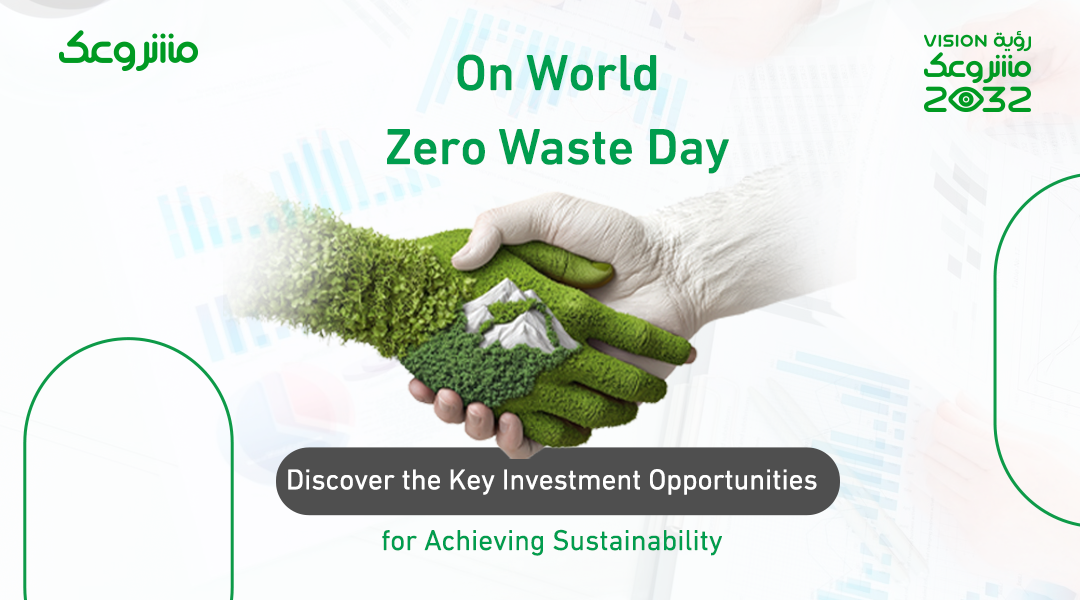
On World Zero Waste Day: Discover the Key Investment Opportunities for Achieving Sustainability - Mashroo3k
Published30 Mar 2025 0 comments 403 Observation
On World Zero Waste Day: Discover the Key Investment Opportunities for Achieving Sustainability

World Zero Waste Day is not just a global event; it’s a call to action for re-evaluating consumption patterns and accelerating sustainability efforts. Waste—whether in food, water, energy, or natural resources—presents a dual challenge, both economically and environmentally, requiring practical solutions to reduce it and improve resource efficiency. As global awareness grows about the importance of resource management, it has become crucial for individuals, organizations, and companies to adopt sustainable strategies, not only to reduce waste but also to foster economic growth and environmental responsibility. In this context, investing in innovative projects to combat waste presents a golden opportunity for investors seeking sustainable economic returns while contributing to environmental and social development. Can reducing waste be the cornerstone of a more prosperous and sustainable future? This article explores the best solutions and practices that can efficiently achieve this goal.

When is World Zero Waste Day?

On December 14, 2022, the United Nations General Assembly, during its 77th session, declared March 30th as World Zero Waste Day. This decision was not just a routine addition to the calendar of international observances but a clear manifestation of a global will to address one of the biggest challenges to achieving sustainable development: waste. This day is not only an awareness event but also a continuous call to governments, institutions, and individuals to adopt more innovative and responsible approaches to resource utilization, turning challenges into opportunities that enhance efficiency and support long-term sustainability.

Objectives of World Zero Waste Day

  • Raise global awareness about the impact of waste on the environment, economy, and communities.
  • Promote a culture of moderation and encourage individuals to reduce waste in their daily lives.
  • Improve resource efficiency across industrial, agricultural, and service sectors.
  • Reduce food waste and enhance food security through better production and distribution methods.
  • Promote circular economy policies through recycling and reuse.
  • Stimulate innovation in waste reduction technologies and smart waste management solutions.
  • Strengthen international partnerships to combat waste and achieve sustainable development.
  • Establish effective regulatory policies to curb waste and mismanagement of resources.
  • Reduce the carbon footprint associated with excessive waste in production and consumption.
  • Encourage the private sector to adopt sustainable strategies that reduce waste.
  • Increase investments in eco-friendly projects that support waste reduction.
  • Engage local communities in reuse and recycling initiatives.
  • Improve waste management systems to maximize resource utilization.
  • Stimulate educational institutions to spread awareness about resource management.

What is the Circular Economy and Its Impact on World Zero Waste Day Goals?

The circular economy represents an innovative economic model that aims to reduce waste and maximize resource use through strategies like reuse, recycling, and repair, instead of disposing of products after consumption. This model focuses on designing products and processes in a way that ensures materials stay within the economy for as long as possible, minimizing the need for new natural resource extraction and reducing environmental pollution. The circular economy plays a crucial role in supporting the goals of World Zero Waste Day by:

  • Reducing resource waste through recycling raw materials and reusing them instead of discarding them.
  • Implementing modern techniques to increase product sustainability and extend their lifespan.
  • Adopting effective practices to reduce waste in supply chains and production processes.
  • Encouraging investments in recyclable materials and environmentally friendly technologies.
  • Lowering carbon emissions and pollution resulting from waste disposal.
  • Supporting governments and companies in creating policies that reduce reliance on new natural resources.

10 Global Initiatives Supporting World Zero Waste Day Targets

  1. Think.Eat.Save Initiative
    Launched by the UN, this initiative aims to reduce food waste by raising awareness about consumption efficiency (1.3 billion tons of food are wasted annually). It focuses on improving supply chains and supporting sustainable agricultural practices to reduce food waste at all stages of production and distribution.
  2. Save Food Project
    Led by the Food and Agriculture Organization (FAO), this project aims to reduce food loss during production, storage, and transportation by developing advanced preservation techniques and improving infrastructure, contributing to food security.
  3. The Global Food Banking Network
    This initiative focuses on saving surplus food and distributing it to those in need through a global network of food banks, maximizing food resources and combating hunger worldwide.
  4. Plastic Waste Reduction Project
    Led by the UN and environmental organizations, this project aims to reduce plastic usage and promote recycling through the development of alternative materials and campaigns to raise awareness about plastic waste, contributing to environmental protection.
  5. The Global Methane Initiative
    This project focuses on reducing methane emissions from food waste and organic waste by converting it into renewable energy, reducing pollution and enhancing sustainability.
  6. The Food Loss and Waste Protocol
    Led by the World Resources Institute (WRI), this initiative sets global standards for measuring food loss and waste, providing tools to improve food management and reduce waste, contributing to food sustainability.
  7. FLW Target 2030 Initiative
    This initiative aims to cut food waste by 50% by 2030. It relies on cooperation between governments, businesses, and communities to improve food management across all stages of the supply chain, contributing to food sustainability.
  8. Zero Waste Program
    This program encourages individuals, companies, and cities to adopt practices that reduce waste and increase recycling rates through effective waste management strategies, contributing to cleaner and more sustainable communities.
  9. Circular Economy Initiative
    This initiative aims to reduce the consumption of natural resources by turning waste into usable resources, creating a more sustainable and efficient economic system.
  10. Sustainable Cities Program
    Focuses on developing eco-friendly infrastructure in cities to reduce waste and wastefulness, improving transportation systems, energy management, and recycling technologies to create more sustainable and resilient cities.

Key Strategies to Reduce Waste and Achieve Zero Waste Goals

On World Zero Waste Day, individuals and organizations can adopt practical strategies to reduce waste and contribute to building a more sustainable future. Here are five effective strategies:

  1. Enhancing Recycling and Reuse
    Adopt policies that ensure maximum resource use by recycling industrial and food waste and reusing materials that can be converted.
  2. Improving Supply Chain Efficiency
    Reduce waste in production, transportation, and storage through advanced technologies like artificial intelligence to analyze consumption and demand accurately.
  3. Developing Sustainable Packaging
    Use eco-friendly materials that are biodegradable or recyclable to reduce plastic waste and minimize environmental impact.
  4. Raising Community Awareness
    Launch awareness campaigns to encourage individuals and businesses to adopt responsible consumption patterns, reduce food waste, and protect natural resources.
  5. Promoting the Circular Economy
    Encourage companies to adopt a circular economy model focused on reducing waste through redesign, repair, and recycling, enhancing both economic and environmental sustainability.

Key Investment Opportunities from “Mashroo3k” Consulting for World Zero Waste Day

Mashro3ak Consulting recognizes that tackling waste is not only an environmental responsibility but also a gateway to golden investment opportunities that drive sustainable economic growth. In celebration of World Zero Waste Day, the company presents leading investment solutions that blend high profitability with a commitment to sustainability. These solutions include detailed feasibility studies for transformative projects such as waste recycling and extracting economic value from waste, turning what was once considered a burden into a productive asset. These projects contribute strongly to the circular economy model, making them an ideal choice for investors looking to achieve sustainable profits while leaving a positive mark on preserving our planet. Key investment opportunities include:

To get in touch with our team and learn more about our services.


Similar Articles

How to Turn a Kebab Restaurant Project into a Distinctive Brand in Egypt?

The kebab restaurant project is one of the food-service ventures that combines strong demand for grilled meals with the opportunity to target a diverse customer base, including individuals, families, and lovers of traditional Middle Eastern cuisine. With growing competition in the restaurant sector, however, the project’s success is no longer determined by food taste alone. […]

Read more

Children’s Play Center Project in Saudi Arabia: How to Create an Experience That Attracts Children and Families?

A children’s toy store project is not limited to selling toys; it is built on understanding what attracts children and what families look for when choosing products that combine entertainment and educational value. With the wide variety of educational toys, skill-development games, recreational toys, and gifts available, the store has opportunities to meet the needs […]

Read more

Residential Complex Project in Saudi Arabia: An Investment That Creates Value Beyond Residential Units

A residential complex project is no longer simply an investment in a collection of real estate units. It has evolved into an integrated development model that combines comfortable living, diverse services, and long-term investment value. As cities expand and residents’ needs evolve, demand is growing for residential complexes that offer a comprehensive environment suited to […]

Read more

Veterinary Clinic Project in Egypt: A Promising Investment Opportunity in the Animal Care Sector

The veterinary clinic project comes at a time when animal care is no longer limited to treating illnesses or injuries, but has expanded to include health monitoring, vaccinations, routine checkups, and care for both pets and livestock. However, many animal owners face challenges in accessing specialized veterinary services that combine prompt response, high-quality care, and […]

Read more

Green Friday

فرصة لا تتكرر

GREEN FRIDAY

خصم 25% على خدمات مشروعك استفد من العرض الآن، فالفرصة متاحة لفترة محدودة فقط
سجّل بياناتك واحصل على خصم 25% الآن