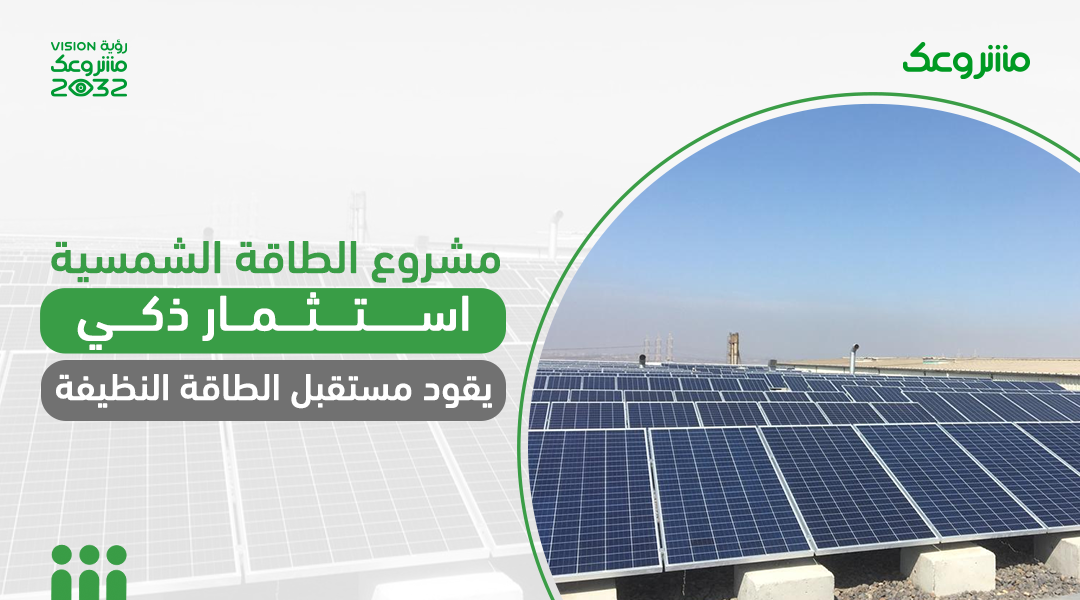
The solar energy project is no longer merely an innovative idea or an alternative investment option; it has become one of the most important and fastest-growing economic sectors worldwide. This is particularly evident in light of the global shift toward clean and sustainable energy sources. With the continuous rise in traditional electricity costs and increasing awareness of the importance of environmental preservation and reducing harmful emissions, this project has emerged as a genuine investment opportunity that combines strong financial returns with positive environmental impact.
In this context, Saudi Arabia’s Vision 2030 stands out as one of the most ambitious models supporting the transition toward renewable energy. The Kingdom is working to diversify its income sources and reduce its reliance on oil by investing in clean energy projects, particularly solar energy. This direction is reflected in the launch of numerous large-scale initiatives and projects aimed at enhancing renewable energy production and increasing its contribution to the national GDP. Consequently, this creates wide-ranging opportunities for investors and entrepreneurs to enter this promising sector.
A solar energy project is a project that relies on harnessing sunlight and converting it into electrical or thermal energy using specialized technologies such as solar panels (photovoltaic cells). This type of project is used to generate electricity for homes, commercial and industrial facilities, or even to establish large power plants that supply public electrical grids.
The solar energy project is considered a sustainable and environmentally friendly investment, as it produces no harmful emissions. It can be implemented on different scales, ranging from small systems installed on rooftops of homes to large-scale investment projects that generate significant long-term profits.
Yes, global economic indicators confirm that solar energy projects are now classified among the most promising investments in terms of feasibility and profitability. This is clearly reflected in the figures; the global solar energy market reached approximately $253.69 billion in 2023, highlighting the scale of the worldwide shift in demand for this sector.
This upward trajectory is expected to continue steadily, with the market projected to grow from $273 billion in 2024 to over $436 billion by 2032, achieving a compound annual growth rate (CAGR) of around 6%. These indicators strongly reinforce the view that entering the solar energy sector is no longer just an investment risk, but rather a well-founded economic decision supported by solid data and sustainable growth prospects.
Investing in a solar energy project offers many advantages that make it an attractive option for investors and entrepreneurs, especially in light of the global shift toward clean energy. The most notable benefits include:
Long-term sustainability, as the project relies on a renewable and inexhaustible energy source—sunlight—which ensures continuous operation for many years without concerns about resource depletion.
A strong and stable return on investment, as the project can generate consistent profits over the long term, whether through reducing electricity bills or selling energy to public grids.
Increasing government support, as solar energy projects receive significant attention from governments, particularly within strategic plans such as Saudi Vision 2030, which encourages investment in renewable energy through incentives and facilitation measures.
Flexibility in investment scale, allowing entry into the sector at different levels depending on your budget—ranging from small rooftop systems to large commercial projects supplying power to public grids.
With the continuous rise in electricity prices and growing environmental awareness, the solar energy market is expanding day by day, meaning investors are entering a growing and high-potential market.
Investing in solar energy not only generates financial returns, but also provides environmental value and enhances corporate reputation in a world that increasingly values sustainability and environmental responsibility.
Please read here: The best projects in Saudi Arabia.. your guide to investment opportunities aligned with Vision 2030
To start a solar energy project, there are several essential tools and equipment that the system relies on to generate, store, and distribute electricity. The most important include:
The cost of starting a solar energy project varies depending on the target production capacity, the type of system used, and the level of equipment and technology involved. Overall, costs are divided into several main components, including:
| Potential Risks | Impact | Ways to Overcome |
|---|---|---|
| High initial cost | May hinder project launch and put pressure on profit margins in the early stages | Prepare an accurate feasibility study, choose the appropriate system size for the budget, and explore flexible financing options |
| Poor equipment quality | Reduced production efficiency and shorter system lifespan, threatening project continuity and returns | Work with reputable suppliers and ensure the selection of certified equipment that meets international standards |
| Poor site selection | Significant decrease in energy production efficiency, negatively affecting productivity and investment return | Conduct a thorough field study to select a site with strong and consistent sunlight exposure during peak hours |
| Installation errors | Frequent breakdowns and energy losses, reducing system efficiency and increasing maintenance costs | Rely on specialized technicians and experienced installation companies with a strong track record |
| Weak maintenance | Gradual decline in system performance and reduced efficiency over time, lowering investment returns | Establish a regular maintenance plan, including panel cleaning and component inspection to maintain optimal performance |
| Weather fluctuations | Temporary reduction in energy production during cloudy or stormy periods, affecting supply stability | Integrate battery storage systems to cover low-production periods and ensure continuous energy supply |
| Licensing issues | Delays in project startup or possible shutdown, leading to significant financial losses | Obtain all necessary permits and approvals in advance and coordinate early with relevant authorities |
| Lack of operational experience | Inefficient system management, leading to poor decisions and missed optimization opportunities | Invest in continuous training for staff and consult experts when needed to ensure professional management |
A solar energy project directly supports the Saudi Green Initiative by contributing to its announced environmental and climate objectives for 2030. It helps reduce dependence on fossil fuels, which in turn supports lowering carbon emissions by around 278 million tons annually. This significantly improves air quality and helps mitigate climate change at the local level.
This impact aligns with the initiative’s environmental track, which aims to plant 10 billion trees across the Kingdom in the coming decades—equivalent to rehabilitating 40 million hectares of degraded land. Transitioning to clean energy helps create a more stable environment with better water and climate conditions, which supports vegetation growth and land restoration.
In the same context, solar energy projects contribute to protecting 30% of Saudi Arabia’s land and marine areas by reducing pollution generated from energy and industrial activities. This helps preserve ecosystems and reflects an integrated national approach that links renewable energy infrastructure with environmental priorities through measurable and trackable indicators.
Please read here: On Saudi Green Day 2026, the Kingdom adopts sustainability as a pathway for the future.
Location requirements:
The site must be within commercial buildings, mixed-use buildings (commercial-residential), or within warehouses if the activity is carried out as part of an existing building.
The site must be located in areas designated for commercial use if the activity is in an independent location.
The site must be within areas designated for commercial use, and the activity is allowed in permitted locations according to regulations and instructions if it is outside the urban boundary.
The shop or facility area must not be less than 24 square meters, or as specified in the approved building permit.
Special requirements:
Comply with commercial signage requirements in case there is no regulatory guide for signage issued by the municipality.
Comply with the requirements for non-food retail outlets.
It is permitted to carry out additional activities approved by the ministry, provided that the total area of additional activities does not exceed 50% of the total licensed area, and that the area of any additional activity is not less than 6 square meters.
For more details about the requirements for selling solar panels in Saudi Arabia, click here
My experience with a solar energy project
One of our clients from Riyadh shares his experience with us:
“When I decided to enter the solar energy field, I was 100% convinced that this sector has a strong future and huge opportunities, especially with the global shift toward clean energy and sustainability. But honestly, once I started getting into the actual details of the project, I felt that it was much bigger and more complex than I had imagined.
Every day I was discovering a new challenge. The licensing and financing issues were the most stressful part for me.
I reached a stage where my initial excitement started to fade, and I seriously considered stepping back from the project entirely and looking for another, clearer and easier investment opportunity, because things felt very unclear and I wasn’t sure if I was on the right path or not.
During that period, an acquaintance advised me to contact Mashroo3k Company, and he literally said: ‘Don’t make any decision before consulting them.’ Honestly, from the very first meeting, I felt a huge difference. It was clear they had strong experience and deep market understanding, and most importantly, they were listening carefully to every detail I had.
The team immediately started preparing a comprehensive feasibility study for the project. It wasn’t just numbers; it was a detailed study covering technical, financial, marketing, and operational aspects. They gave me a clear picture of market demand, expected costs, potential returns, and even the risks and how to deal with them professionally.
As for financing, this was truly the turning point for me, because it was my biggest concern. But the Mashroo3k team didn’t leave me alone in this. They supported me step by step, helped me prepare all required documents professionally, and enabled me to qualify for funding from the Social Development Bank—something I honestly did not expect to achieve so quickly and easily.
Today, thank God, I can proudly say that the project is up and running with excellent efficiency, and the results have even exceeded my initial expectations. What started as just an idea in my mind has now become a successful project and a real investment with a strong future in the market.”
What is the lifespan of solar panels?
Solar panels typically last between 25 to 30 years, continuing to produce energy efficiently, although their performance may gradually decrease over time.
Do solar panels need to be washed?
Yes, it is recommended to clean solar panels regularly to remove dust and dirt that may reduce efficiency, especially in desert or dusty regions, using safe cleaning methods that do not scratch the surface.
How many solar panels does a house need?
The number of panels depends on household electricity consumption, system size, and appliances used. It is accurately determined after analyzing daily energy usage.
How many solar panels are needed to run a 3 HP water pump?
To operate a 3-horsepower pump, you need approximately 2,238 watts. With a 25% safety margin for startup load, the requirement rises to about 2,812 watts. Based on 400-watt panels, you would need at least 7 solar panels.
If the pump runs on AC power, an inverter of at least 3,000 watts is required. If it runs on DC, it can be connected directly through a charge controller. Sunlight hours and daily operating time also determine whether battery storage is needed.
What are the 9 advantages of solar panels?
Read here: How is green technology leading the world toward a more sustainable future?
We can say that the solar energy project is considered one of the most prominent investment opportunities that align with the demands of the modern era, as it combines achieving a good economic return with contributing to environmental protection. With recent trends and the support of initiatives such as Saudi Vision 2030, this field has become even more attractive for those seeking a sustainable future-oriented project.
It is also worth noting that proper planning and a clear understanding of market needs represent the essential first step toward success and a confident entry into this promising sector.

For inquiries and to request a feasibility study for a solar energy project
The kebab restaurant project is one of the food-service ventures that combines strong demand for grilled meals with the opportunity to target a diverse customer base, including individuals, families, and lovers of traditional Middle Eastern cuisine. With growing competition in the restaurant sector, however, the project’s success is no longer determined by food taste alone. […]
Read moreA children’s toy store project is not limited to selling toys; it is built on understanding what attracts children and what families look for when choosing products that combine entertainment and educational value. With the wide variety of educational toys, skill-development games, recreational toys, and gifts available, the store has opportunities to meet the needs […]
Read moreA residential complex project is no longer simply an investment in a collection of real estate units. It has evolved into an integrated development model that combines comfortable living, diverse services, and long-term investment value. As cities expand and residents’ needs evolve, demand is growing for residential complexes that offer a comprehensive environment suited to […]
Read moreThe veterinary clinic project comes at a time when animal care is no longer limited to treating illnesses or injuries, but has expanded to include health monitoring, vaccinations, routine checkups, and care for both pets and livestock. However, many animal owners face challenges in accessing specialized veterinary services that combine prompt response, high-quality care, and […]
Read more
خصم 25% على خدمات مشروعك استفد من العرض الآن، فالفرصة متاحة لفترة محدودة فقط
سجّل بياناتك واحصل على خصم 25% الآن


