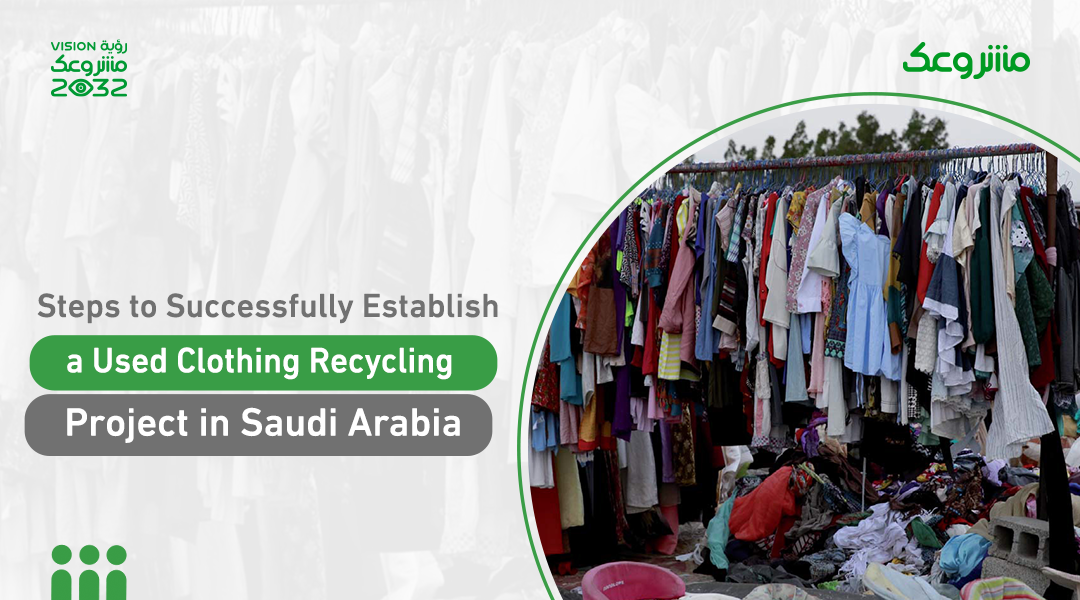
In light of the global shift toward the circular economy and sustainability, the Used Clothing Recycling Project has emerged as one of the most promising industrial ventures, combining profitability with environmental preservation. As the volume of discarded clothing continues to grow and demand for recycled products increases, this project presents significant investment opportunities for entrepreneurs and investors seeking to enter a rapidly expanding industrial sector.
However, the success of the project depends not only on the idea itself but also on careful planning and a comprehensive feasibility study that defines the target market, technical requirements, investment costs, and expected returns. In this article, we explore everything you need to know about a Used Clothing Recycling Project, from the essential steps for establishment and operational requirements to the key success factors and the process of preparing a professional feasibility study that ensures the project is launched on a solid investment foundation.
A Used Clothing Recycling Project is an industrial venture that focuses on collecting, sorting, and processing used garments to maximize their value through various recycling methods. This may involve reselling wearable clothing after cleaning and refurbishment or converting damaged garments into fibers and raw materials used in the production of new products such as textiles, insulation materials, stuffing, upholstery, and other industrial applications.
The success of the project depends on establishing suitable production lines and equipment, along with implementing an efficient sorting system that classifies clothing according to its condition and quality. This approach maximizes the utilization of raw materials while minimizing waste. The project is considered a promising investment opportunity due to its strong economic potential and its significant contribution to environmental sustainability by reducing textile waste and promoting the efficient reuse of resources.
Read here: The best recycling project ideas to boost the growth of the circular economy
Yes. The Used Clothing Recycling Project stands out as a promising investment opportunity with growing economic potential, driven by the accelerating global shift toward the circular economy and the fundamental transformation of consumer preferences toward sustainable alternatives.
Market indicators highlight the strength and resilience of this sector. The global used clothing recycling market was valued at approximately USD 7,983 million in 2025 and is projected to grow at a compound annual growth rate (CAGR) of 10.7%. According to market forecasts, the industry is expected to continue its strong expansion, reaching USD 22,062 million by 2035.
These figures reflect the market’s increasing adoption and demonstrate that investing in this sector offers not only attractive financial returns but also the opportunity to contribute to environmental sustainability initiatives while meeting the growing demand for recycled products.
The cost of establishing a Used Clothing Recycling Plant depends on several key factors, including:
Read here: How You Can Implement a Recycling Project
A Used Clothing Recycling Project requires a range of equipment and tools to ensure efficient production operations. The most important include:
Read here: Discover how to turn waste into wealth through recycling
When selecting a supplier for a Used Clothing Recycling Project, it is essential to consider several criteria to ensure a consistent supply of high-quality raw materials. Key factors include:
Sales can be increased by implementing a range of effective strategies, including:
| Risk | How to Mitigate It |
|---|---|
| Irregular supply of used clothing | Partner with multiple suppliers and build a diversified supply network. |
| Rising operating costs | Improve resource efficiency and perform regular maintenance on equipment. |
| Poor-quality raw materials | Implement a strict system for sorting and inspecting garments before production. |
| Increasing market competition | Offer high-quality products and develop a strong competitive advantage. |
| Weak demand for certain products | Diversify the product portfolio and target different markets and customer segments. |
| Unexpected production line breakdowns | Implement preventive maintenance programs and maintain an inventory of essential spare parts. |
| Difficulty marketing products | Adopt a comprehensive marketing strategy that includes digital marketing and strategic business partnerships. |
| Changes in regulations and compliance requirements | Monitor regulatory updates and ensure full compliance with all legal and environmental requirements. |
| Shortage of skilled labor | Provide continuous employee training and recruit qualified personnel. |
| Fluctuating energy and transportation costs | Develop a flexible financial plan and regularly review operating costs to minimize the impact of price fluctuations. |
Read here: How to Turn a Used Clothing Business into a Sustainable Source of Income
With the growing focus on sustainability and the circular economy in the Kingdom of Saudi Arabia, I noticed the remarkable growth of the Used Clothing Recycling Project sector in Riyadh, driven by increasing environmental awareness and rising demand for recycled products across various industries. This encouraged me to invest in the sector, recognizing its strong potential and promising growth opportunities.
However, during the initial stages of implementation, I encountered several challenges, including developing a comprehensive operational plan, determining the appropriate investment size, selecting suitable production lines, and securing the financing required to establish and equip the factory in accordance with technical and operational requirements.
At this stage, I sought the expertise of Mashroo3k Consulting, whose team prepared a comprehensive feasibility study covering the project’s marketing, technical, financial, and administrative aspects. The study provided a clear implementation roadmap, detailed cost estimates, projected revenues, profitability indicators, and potential risks, giving me the confidence to make well-informed investment decisions.
The support provided by Mashroo3k Consulting extended beyond the feasibility study. Their team also assisted me in preparing the financing application in line with the requirements of the Saudi Industrial Development Fund (SIDF) and guided me through all the necessary procedures until the financing was successfully secured.
After obtaining the required funding, I was able to purchase the machinery and production lines, and the factory began operations efficiently. It is now successfully meeting the growing demand for recycled products. Today, the project operates smoothly and sustainably, thanks to the comprehensive support and professional consulting services provided by Mashroo3k Consulting throughout every stage of establishment and operation.
There are many ways to recycle used clothing and maximize the value of reusable fabrics and materials. Used garments can be transformed into fabric bags, home furnishings, cushions, and decorative items. Fabrics can also be processed into recycled fibers for manufacturing textiles, stuffing materials, and thermal and acoustic insulation products. In addition, used clothing can be redesigned into new garments and accessories or converted into cleaning cloths and industrial wipes. This wide range of applications increases the economic value of used clothing, reduces waste, and supports the principles of sustainability and the circular economy.
Yes. A Used Clothing Recycling Plant is considered a promising and profitable investment due to the growing demand for recycled products and the increasing global emphasis on sustainability and environmental protection. The project also benefits from the availability of raw materials, a diverse range of marketable products, and the potential to generate attractive investment returns when supported by a comprehensive feasibility study, suitable equipment, and an effective operational and marketing strategy tailored to the target market.
Starting a used clothing business begins with conducting market research and identifying the target customer segment. The next steps include securing a reliable source of used clothing, sorting garments according to their quality and condition, and then cleaning, preparing, and presenting them in an attractive manner. Suitable sales channels should be selected, whether through a physical store, an online store, or social media platforms. It is also essential to develop a competitive pricing strategy and implement an effective marketing plan to attract customers. Providing high-quality products and excellent customer service will help ensure sustainable sales and long-term profitability.
Among the most commonly recyclable materials are paper and cardboard, which are reused to manufacture new paper products; plastic, which is recycled into containers, tools, and a wide range of industrial products; and metals such as aluminum and steel, which can be melted down and remanufactured multiple times without losing their essential properties. In addition, textiles and used clothing are also recyclable materials that can be processed into new products with significant economic value.
Yes. A Used Clothing Recycling Plant requires obtaining the necessary licenses and permits in accordance with the applicable laws and regulations of the country where the project will be established. Licensing requirements vary depending on the nature of the activity and the plant’s location, but they typically include commercial registration, industrial licenses, environmental approvals, and occupational health and safety compliance. Therefore, it is advisable to review all regulatory requirements before commencing the project to ensure legal and compliant operations.
In conclusion, the Used Clothing Recycling Project represents a promising investment opportunity that combines economic viability with a positive environmental impact, particularly amid the growing global focus on sustainability and the green economy. However, achieving success in this sector requires a thorough market analysis, along with sound financial, technical, and operational planning to ensure efficient resource utilization and minimize potential risks.
This is where a professional feasibility study becomes essential, enabling you to make informed investment decisions and launch your project with confidence. If you are planning to establish a Used Clothing Recycling Project, Mashroo3k Consulting provides a comprehensive feasibility study prepared in accordance with the latest industry standards, giving you a clear vision and a solid foundation for building a successful and sustainable business.

Contact us to request a feasibility study for a Used Clothing Recycling Project.
The kebab restaurant project is one of the food-service ventures that combines strong demand for grilled meals with the opportunity to target a diverse customer base, including individuals, families, and lovers of traditional Middle Eastern cuisine. With growing competition in the restaurant sector, however, the project’s success is no longer determined by food taste alone. […]
Read moreA children’s toy store project is not limited to selling toys; it is built on understanding what attracts children and what families look for when choosing products that combine entertainment and educational value. With the wide variety of educational toys, skill-development games, recreational toys, and gifts available, the store has opportunities to meet the needs […]
Read moreA residential complex project is no longer simply an investment in a collection of real estate units. It has evolved into an integrated development model that combines comfortable living, diverse services, and long-term investment value. As cities expand and residents’ needs evolve, demand is growing for residential complexes that offer a comprehensive environment suited to […]
Read moreThe veterinary clinic project comes at a time when animal care is no longer limited to treating illnesses or injuries, but has expanded to include health monitoring, vaccinations, routine checkups, and care for both pets and livestock. However, many animal owners face challenges in accessing specialized veterinary services that combine prompt response, high-quality care, and […]
Read more
خصم 25% على خدمات مشروعك استفد من العرض الآن، فالفرصة متاحة لفترة محدودة فقط
سجّل بياناتك واحصل على خصم 25% الآن


