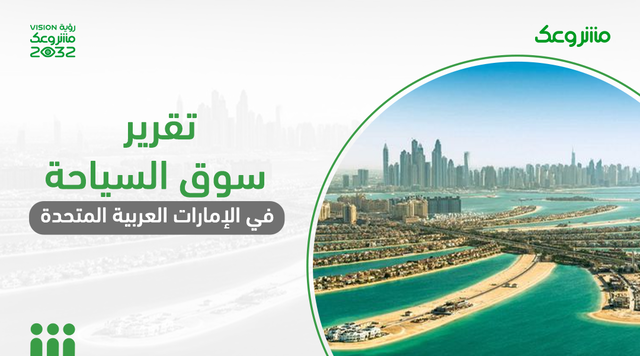
The tourism sector in the United Arab Emirates is considered one of the key pillars supporting economic growth and strengthening the country’s position as a leading global destination. Over the past years, the UAE has achieved significant development in this sector through investment in advanced infrastructure, the development of tourism services, and the diversification of activities that meet the needs of various visitors.
The tourism sector in the UAE is characterized by its unique diversity, combining leisure, cultural, and medical tourism, making it an attractive destination throughout the year. Flexible and investment-friendly government policies have also contributed to enhancing the sector’s appeal and increasing annual tourist arrivals. Cities such as Dubai and Abu Dhabi are among the world’s most prominent tourist destinations, blending modernity with authenticity.
This report aims to highlight the current state of tourism in the UAE, its key success factors, and its role in supporting the national economy and achieving sustainable development.
The tourism sector in the UAE is characterized by several factors that make it one of the most attractive sectors for investment, including:
Objectives of the UAE National Tourism Strategy 2031
The travel and tourism sector in the United Arab Emirates is witnessing continuous growth, reflecting the strength of tourism activity and the increasing attractiveness of the country as a global destination for both tourism and business. The number of hotels in the UAE reached approximately 1,271 hotels in 2025, with expectations to rise to around 1,296 hotels by the end of 2026, and to continue expanding to about 1,403 hotels by 2030, reflecting the growing tourism and hospitality investments in the country.
In addition, hotel guest numbers reached approximately 26.96 million guests in 2025, with projections to increase to around 27.57 million guests by the end of 2026, supported by a growth rate of about 2.27%, confirming the sustained tourism momentum and the increasing demand for hospitality and accommodation services in the UAE market.
The travel and tourism market in the United Arab Emirates continues to achieve strong growth, supported by the development of tourism infrastructure, the diversification of activities and events, and ongoing investments in the hospitality and entertainment sectors, all of which reinforce the country’s position as a global tourism destination.
The UAE travel and tourism market size reached approximately USD 68 billion in 2025, with revenues expected to rise to around USD 75.5 billion by the end of 2026. Projections also indicate continued growth, with the market expected to reach about USD 114.7 billion by 2030, at a compound annual growth rate (CAGR) of approximately 11% during the period 2025–2030, reflecting the increasing demand for travel and tourism in the country.
The global travel and tourism market has witnessed significant expansion in recent years, driven by the increasing volume of international travel, rising demand for leisure and business tourism, and major advancements in air transport services and tourism infrastructure worldwide. Digital transformation has also contributed to improving the traveler experience and simplifying booking and mobility processes, thereby strengthening sector growth and enhancing its ability to attract diverse segments of tourists.
Projections indicate that this growth will continue at an accelerated pace in the coming years, with the global travel and tourism market expected to reach approximately USD 1,493.79 billion by the end of 2026, and further rise to nearly USD 18,221.95 billion by 2033, at a compound annual growth rate (CAGR) of around 8.9% during the period 2026–2033.
Please read here: On World Tourism Day 2025… Make Your Investment a Pillar of Sustainable Development
The UAE relies on hosting major international conferences and exhibitions as a key tool to stimulate the tourism sector and enhance its global standing. Large-scale events such as Expo 2020 Dubai have attracted millions of visitors from around the world, positively impacting hotel occupancy rates, air traffic, and the hospitality and retail sectors, while also reinforcing Dubai’s image as a global hub for business, culture, and tourism.
The UAE places significant emphasis on developing the concept of smart tourism by leveraging modern technologies and digital solutions to enhance the visitor experience. The country also seeks to promote sustainability through the adoption of environmental initiatives and projects that rely on clean energy and advanced technologies, thereby strengthening the competitiveness of the tourism sector at the global level.
Festivals and entertainment events contribute to attracting diverse segments of tourists throughout the year. The UAE hosts prominent global events such as the Dubai Shopping Festival and GITEX Global, which support retail activity, entertainment, and family tourism, while also contributing to higher levels of tourism spending within the country.
The UAE is keen to highlight its cultural and heritage identity through the organization of festivals and events that reflect the country’s history and authentic traditions. Among the most notable events are the Sheikh Zayed Festival and the Liwa Moreeb Festival, which combine heritage, sports, and entertainment activities.
The UAE has a highly developed infrastructure that includes world-class airports, modern transportation networks, and luxury hotels and resorts. This enhances the quality of services provided to tourists and strengthens the country’s capacity to accommodate a growing number of visitors annually.
The UAE tourism sector is characterized by a wide diversity that includes leisure, cultural, medical, eco-tourism, and business tourism, giving the country a stronger ability to attract various tourist segments from regional and international markets.
Read Here: Everything You Need to Know About SWOT Analysis and How It Is Applied

To communicate and learn more about Mashroo3k company and its services
The kebab restaurant project is one of the food-service ventures that combines strong demand for grilled meals with the opportunity to target a diverse customer base, including individuals, families, and lovers of traditional Middle Eastern cuisine. With growing competition in the restaurant sector, however, the project’s success is no longer determined by food taste alone. […]
Read moreA children’s toy store project is not limited to selling toys; it is built on understanding what attracts children and what families look for when choosing products that combine entertainment and educational value. With the wide variety of educational toys, skill-development games, recreational toys, and gifts available, the store has opportunities to meet the needs […]
Read moreA residential complex project is no longer simply an investment in a collection of real estate units. It has evolved into an integrated development model that combines comfortable living, diverse services, and long-term investment value. As cities expand and residents’ needs evolve, demand is growing for residential complexes that offer a comprehensive environment suited to […]
Read moreThe veterinary clinic project comes at a time when animal care is no longer limited to treating illnesses or injuries, but has expanded to include health monitoring, vaccinations, routine checkups, and care for both pets and livestock. However, many animal owners face challenges in accessing specialized veterinary services that combine prompt response, high-quality care, and […]
Read more
خصم 25% على خدمات مشروعك استفد من العرض الآن، فالفرصة متاحة لفترة محدودة فقط
سجّل بياناتك واحصل على خصم 25% الآن


