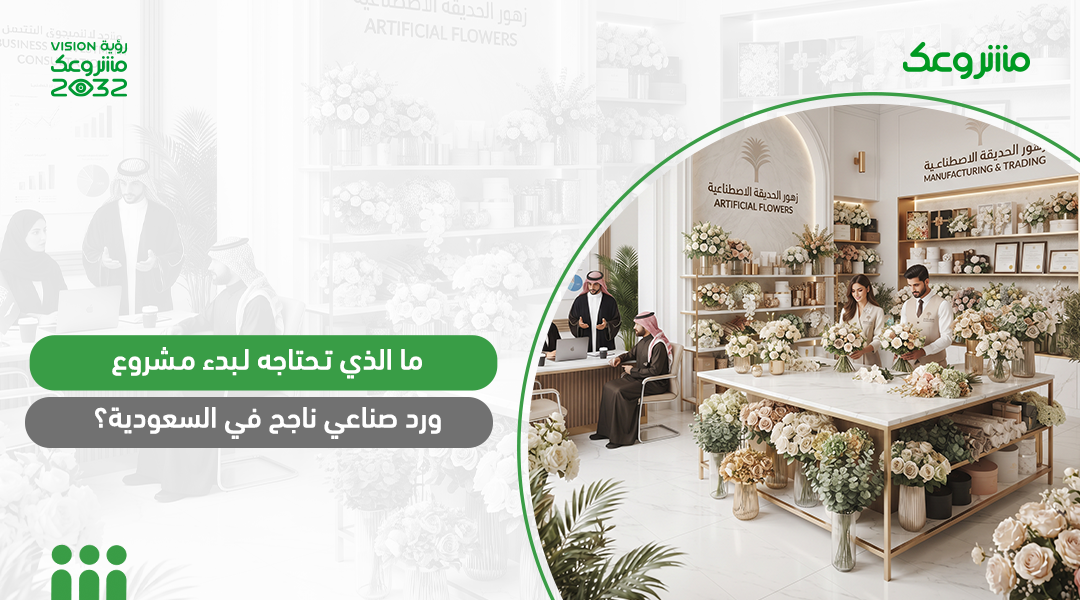
The artificial flower business is one of the commercial ventures experiencing growing demand in the market, driven by the continued use of artificial flowers for occasions such as weddings, birthdays, and grand openings, as well as for home and commercial décor. The project is characterized by a lower risk of product spoilage compared to natural flowers and a wide variety of products that can be offered, giving investors diverse opportunities to achieve profitable returns.
With the growing interest in high-quality décor and gift products, the artificial flower business has become an attractive investment option for those looking to enter this sector with flexible capital requirements and the potential for gradual expansion. In this overview, we explore the key components of the project, its requirements and costs, success factors, and the main challenges it may face, along with how a feasibility study can contribute to building a successful and sustainable business.
An artificial flower business is a commercial activity that specializes in manufacturing, arranging, and selling artificial flowers designed to resemble natural flowers in appearance and color. It caters to the needs of individuals and businesses in areas such as décor, gifts, and event decoration.
The business relies on a variety of materials, including fabrics, plastic, and synthetic materials, which are shaped and assembled using techniques that give the flowers an attractive appearance and suitable quality for long-term use. Products can be offered in the form of bouquets, decorative arrangements, wreaths, and customized floral designs for weddings and special occasions, with the option to create bespoke designs based on customer requirements.
Yes, an artificial flower business can be profitable, supported by promising market indicators. The global artificial flowers market was valued at USD 1.78 billion in 2025 and is projected to reach USD 1.86 billion in 2026, continuing its upward growth trajectory to reach USD 2.91 billion by 2034. This represents a compound annual growth rate (CAGR) of 5.76% over the period from 2026 to 2034.
An artificial flower business offers several advantages that make it a promising investment opportunity, particularly amid growing demand for décor and gift products. Its key advantages include the following:
Read here: How the Global Forum for Roses and Aromatic Plants supports Saudi Vision 2030
The cost of establishing an artificial flower business in Saudi Arabia varies depending on the project’s size, location, and target products. However, the main expenses to consider include the following:
Read Here: A Flower Shop Project – A Promising Investment Opportunity with a High Profit Margin
The business may face strong competition from flower shops, gift stores, and online retailers, which can affect sales volume. This risk can be mitigated by offering innovative designs, maintaining product quality, providing excellent customer service, and building a strong brand.
Sales may decline outside peak seasons, holidays, and special occasions, affecting revenue. This risk can be reduced by diversifying products, launching seasonal promotions, and targeting businesses such as companies, hotels, and offices that require artificial flowers throughout the year.
The prices of artificial flowers and packaging supplies may increase due to changes in import prices or transportation costs. This risk can be mitigated by working with multiple suppliers, establishing long-term supply agreements, and maintaining an appropriate stock of essential products.
Purchasing large quantities of products that do not attract sufficient demand can tie up working capital. This can be avoided by monitoring sales, analyzing best-selling products, and purchasing inventory according to market needs.
Low-quality artificial flowers can negatively affect customer satisfaction and repeat purchases. To address this risk, the business should select reliable suppliers, inspect products before displaying them for sale, and prioritize high-quality materials.
Failure to reach target customers online can limit business growth. This challenge can be addressed by establishing a professional online store, marketing through social media platforms, leveraging digital advertising, and improving search engine visibility.
Increases in rent, salaries, and other operating expenses can reduce profitability. This risk can be minimized by preparing an accurate operating budget, monitoring expenses regularly, and improving resource efficiency.
Décor and gift design trends change constantly, potentially reducing demand for certain products. This risk can be managed by following the latest trends, updating product collections regularly, and introducing new products that meet customer needs.
Supplier delays can lead to stock shortages and lost sales opportunities. This risk can be reduced by maintaining relationships with alternative suppliers and keeping reserve stock of the most popular products.
Inefficient inventory organization can result in lost products or difficulties tracking available quantities. This can be addressed by implementing an inventory management system, conducting regular stock counts, and continuously monitoring product movement.
The success of an artificial flower business was not solely dependent on offering distinctive products; it also required professional planning and well-structured management from the outset. As demand for artificial flowers grew in the Kingdom of Saudi Arabia, I decided to enter this market. However, I faced several challenges, including developing a clear operational plan, estimating costs, securing appropriate financing, and overcoming marketing difficulties such as limited brand visibility, challenges in reaching target customers, and intense competition from established businesses.
Therefore, I turned to Mashroo3k Consulting, which prepared a professional feasibility study covering all technical, financial, and marketing aspects of the project. The company also helped me complete the procedures for obtaining financing from… Social Development Bank It also developed an effective marketing plan that focused on identifying the target audience, selecting the right marketing channels, and improving product presentation, which contributed to increased sales and improved operational efficiency. Thanks to the expertise of Mashroo3k Consulting’s team, the business became more organized and competitive, achieving significantly better results than it had in its early stages.
Read Here: How Does a Flower Shop Feasibility Study Ensure Profitability and Sustainability for Your Investment Project?
To successfully launch an artificial flower business, you should first conduct a feasibility study to determine market demand, target customers, and an appropriate budget. Next, choose a suitable location for your showroom or establish an online store if you intend to sell online. Then, partner with reliable suppliers who can provide high-quality products at competitive prices. Ensure that your business is equipped with display shelves, packaging materials, and flower arrangement supplies. Obtain the necessary business licenses, and develop a marketing strategy that relies on social media platforms, digital advertising, and partnerships with event planners and gift shops.
Yes, an artificial flower business can be successful when implemented according to a well-planned strategy. Demand for artificial flowers is strong for special occasions, home and commercial décor, and gifts. The business becomes more successful by offering high-quality products, providing a variety of designs to suit different tastes, and using effective marketing channels, whether through physical showrooms, online stores, or social media platforms. Choosing the right suppliers, offering competitive prices, and providing excellent customer service also help strengthen the business’s competitive position and generate sustainable profits, particularly when products are continuously improved and the latest market trends are followed.
The price of artificial flowers varies depending on the materials used, manufacturing quality, product size, brand, and sales method, whether retail or wholesale. Individual artificial flowers are generally less expensive than ready-made bouquets or floral arrangements in vases. Floral walls and custom designs for special events tend to cost more because they require larger quantities of materials and additional arrangement work.
Yes, an artificial flower bouquet business can be profitable, especially as demand for bouquets continues to grow for occasions such as weddings, engagements, birthdays, graduations, and gift-giving. Profitability depends on selecting high-quality materials, offering creative designs that appeal to different tastes, and pricing products competitively.
The price of artificial flower bouquets varies according to bouquet size, material quality, the number of flowers, and the packaging and arrangement style. In general, small bouquets start at around SAR 30–80, while medium-sized bouquets range from SAR 80 to 200. Large bouquets, luxury arrangements, and custom designs for special occasions may cost more than SAR 200.
Many types of flowers are used in bouquet arrangements. Garden roses are among the most popular due to their elegant appearance and wide range of colors. Other commonly used flowers include tulips, peonies, lilies, orchids, carnations, hydrangeas, and baby’s breath, which adds a decorative touch to bouquets. Greenery, such as eucalyptus leaves, is also added to enhance the floral arrangement and give it a fresher, more vibrant appearance.
We can conclude that success in the artificial flower business depends not only on offering visually appealing products, but also on understanding market needs, selecting product ranges that match customer preferences, maintaining product quality, and implementing effective marketing strategies.
As demand for artificial flowers continues to grow in décor, gifts, and special occasions, the opportunities to achieve attractive returns from this business are increasing. Therefore, starting with a well-planned strategy and a professional feasibility study provides a clear vision for making sound investment decisions and sets your project on the right path toward growth and success.

Contact Us to Request a Feasibility Study for an Artificial Flower Business
The kebab restaurant project is one of the food-service ventures that combines strong demand for grilled meals with the opportunity to target a diverse customer base, including individuals, families, and lovers of traditional Middle Eastern cuisine. With growing competition in the restaurant sector, however, the project’s success is no longer determined by food taste alone. […]
Read moreA children’s toy store project is not limited to selling toys; it is built on understanding what attracts children and what families look for when choosing products that combine entertainment and educational value. With the wide variety of educational toys, skill-development games, recreational toys, and gifts available, the store has opportunities to meet the needs […]
Read moreA residential complex project is no longer simply an investment in a collection of real estate units. It has evolved into an integrated development model that combines comfortable living, diverse services, and long-term investment value. As cities expand and residents’ needs evolve, demand is growing for residential complexes that offer a comprehensive environment suited to […]
Read moreThe veterinary clinic project comes at a time when animal care is no longer limited to treating illnesses or injuries, but has expanded to include health monitoring, vaccinations, routine checkups, and care for both pets and livestock. However, many animal owners face challenges in accessing specialized veterinary services that combine prompt response, high-quality care, and […]
Read more
خصم 25% على خدمات مشروعك استفد من العرض الآن، فالفرصة متاحة لفترة محدودة فقط
سجّل بياناتك واحصل على خصم 25% الآن


