هذا النص هو مثال لنص يمكن أن يستبدل في نفس المساحة، لقد تم توليد هذا النص من مولد النص العربى، حيث يمكنك أن تولد مثل هذا النص أو العديد من النصوص الأخرى إضافة إلى زيادة عدد الحروف التى يولدها التطبيق.
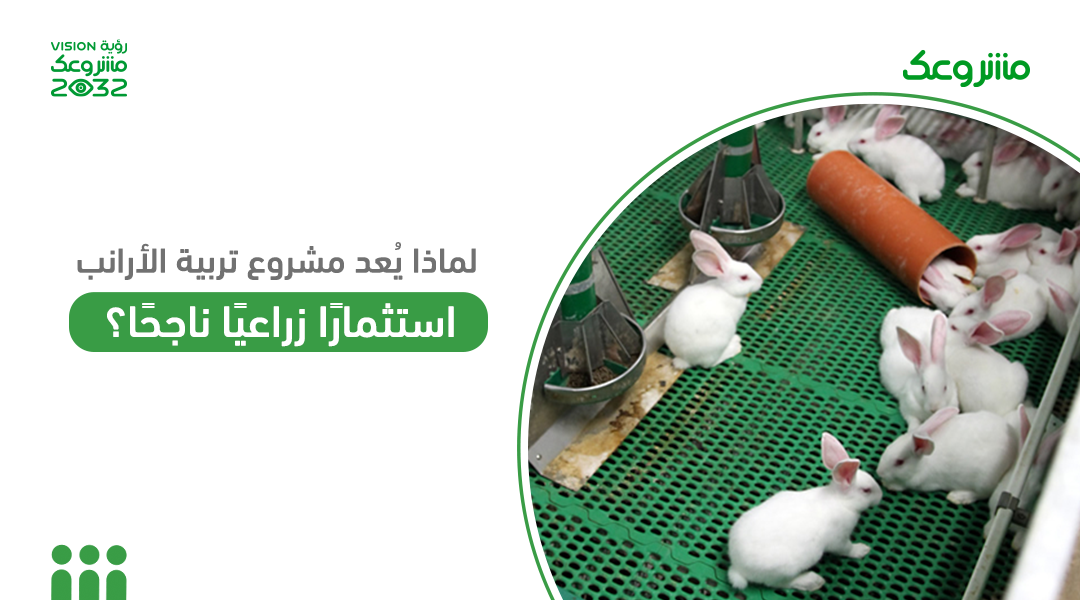
Rabbit breeding is considered a promising agricultural investment with high economic feasibility, especially when implemented within the framework of an integrated production farm based on sound scientific and administrative principles. This activity has gone beyond its traditional limited scope to become an organized, expandable animal investment sector that generates stable returns in the medium and long term. The success of this project is based on an integrated production system that includes the selection of highly productive breeds, the implementation of well-studied feeding and veterinary care programs, and effective operational management aimed at increasing production rates and reducing losses. The project’s appeal stems from the growing local demand for rabbit meat, which is classified as a healthy food with high nutritional value, making it a promising investment opportunity that meets the needs of a growing market and generates attractive returns.
What is a rabbit breeding project?
The rabbit breeding project is an animal production activity carried out through a specialized farm, with the aim of breeding rabbits according to scientific and well-studied operating systems, whether for meat production, breeding, or a combination of both to achieve a stable economic return. The success of the project depends on integrated management, including the selection of high-yield breeds, the creation of a suitable breeding environment in terms of ventilation, temperature, and hygiene, and the implementation of precise feeding and preventive programs that contribute to improving growth and reproduction rates and reducing mortality rates. The project is characterized by its high flexibility and ability to expand gradually, as production capacity can be increased according to market demand and available financial resources, making it an attractive investment option for entrepreneurs looking for a clearly defined, scalable production project based on an efficient operating cycle.
Is rabbit breeding a profitable business?
Yes, rabbit breeding is a highly profitable venture, as confirmed by strong statistical indicators showing remarkable growth in this sector globally. The rabbit breeding market reached US$1.68 billion in 2024 and is expected to rise to US$3.26 billion by 2035, registering a compound annual growth rate of approximately 6.2% during the period from 2025 to 2032. This steady expansion reflects the growing global demand for rabbit products, giving the project high profit potential and making it a promising investment option in the medium and long term.
What are the most important features of the rabbit breeding project?
A high reproduction rate allows for rapid growth in rabbit numbers, boosting production and generating a rewarding economic return within a short period of time.
Capital turnover is fast compared to most other livestock projects, as batches can be marketed in just 3–4 months.
Flexibility in implementation and gradual expansion; it is possible to start with a small farm and then gradually expand according to financial capabilities and market demand.
Relatively low feeding and care costs compared to production volume, thanks to high feed-to-meat conversion efficiency and low space and resource requirements for rabbits.
Stable and growing domestic demand for rabbit meat as a healthy source of protein that is low in fat and cholesterol.
Ease of monitoring and operational control when implementing well-designed production systems and effective management programs, reducing day-to-day complexities.
Potential to diversify income sources through multiple channels: fattening rabbits for slaughter, breeding does for offspring, direct sales to consumers or traders, and utilization of by-products.
Significantly reduced operational risks when strictly adhering to scientifically recommended health and nutrition programs, limiting losses and supporting project sustainability.
What is the cost of a rabbit breeding project in Egypt?
The cost of a rabbit breeding project depends on several key factors, which are as follows:
Purchase foundation rabbits from healthy dams and bucks belonging to high-yielding breeds, selecting them from reliable sources to ensure breeding quality.
Provide breeding cages or multi-tiered batteries designed to ensure good ventilation, ease of cleaning, and freedom of movement to maintain the health of the rabbits.
Installation of lighting, ventilation, and heating equipment necessary to create a stable and suitable environment for breeding throughout the different seasons of the year.
Purchase cleaning and disinfecting supplies necessary for regular use, in order to maintain general cleanliness and reduce the chances of spreading disease.
Obtaining official licenses and local veterinary approvals required to legally conduct business.
Providing high-quality main feed and supplementary feed to ensure healthy growth and achieve good feed conversion rates.
Purchase of preventive medicines and vaccines, in addition to regular veterinary treatments to maintain general health and monitor the rabbits’ medical condition.
The cost of assistance when needed, whether for feeding, cleaning, or daily monitoring of the education cycle.
Electricity and water consumption costs, along with regular maintenance of cages and equipment to ensure their continued operational efficiency.
Transportation and distribution costs for live rabbits or finished products to markets and various outlets, in addition to marketing and advertising costs.
Costs of repairing or replacing cages and equipment damaged as a result of repeated use or the effects of time.
The cost of insuring the farm against potential risks such as epidemics or emergency losses, if you wish to reduce investment risks.
How to start a rabbit breeding project
Many investors wonder how to start a rabbit breeding project. The following points provide a detailed answer on how to get started:
Define the objective of the project: is it for meat production, breeding (selling young animals), or a combination of both?
Conduct a thorough market study to determine the actual demand for rabbit meat in the target region.
Analyze competitors, current selling prices, and the types of rabbits preferred by the local market to ensure a competitive advantage.
Prepare a comprehensive action plan that includes objectives, a detailed budget, and costs for all phases of the project.
Determine the expected return on the project and the capital recovery period to ensure clear investment feasibility.
Select a suitable location for the barns, away from sources of noise and pollution, with easy access to facilities.
Equip barns with adequate ventilation and lighting and sufficient space to provide a healthy and safe environment for rabbits.
Purchase all necessary equipment such as cages, food and water bowls, and cleaning supplies to ensure that work is organized.
Choose balanced feed that contains essential nutrients to ensure healthy and rapid growth of rabbits.
Purchase an appropriate number of healthy rabbits to ensure a strong start to the project and avoid early losses.
Adherence to a health program of regular vaccinations and parasite control to continuously monitor the health of rabbits.
Record daily production, births, and growth rates to facilitate project management and improve productivity.
Search for suitable sales channels, including local shops and markets or direct sales via the Internet.
Regularly monitor and improve nutrition and education systems, and plan for gradual expansion after production and sales have stabilized.
Feasibility study for a rabbit breeding project
Marketing study for a rabbit breeding project
Analysis of current and projected demand for rabbit meat in the target market.
Study the behavior and characteristics of potential customers such as families, restaurants, and butcher shops.
Analysis of competitors in terms of number of farms, prices, product quality, and sales channels.
Assess the available supply and compare it with demand to identify the marketing gap.
Study of prevailing prices for live and slaughtered rabbits and factors affecting them.
Identify the competitive advantage of the project in terms of quality, price, or regularity of supply.
Selecting appropriate distribution channels such as direct sales or commercial contracts.
Develop a promotional plan to raise awareness of the nutritional value of rabbit meat.
Estimating expected sales volume based on production capacity and prices.
Analyze potential marketing risks and develop alternatives to deal with them.
Administrative organizational study of a rabbit breeding project
Define the organizational structure of the project, clarifying administrative and technical responsibilities to ensure clarity of tasks and smooth operation.
Determine the number of workers required and describe the tasks of each job, such as supervision, feeding, cleaning, and health monitoring.
Establish an administrative system to organize daily work on the farm and ensure adherence to feeding, cleaning, and care schedules.
Organize a communication mechanism between management and workers to ensure quick decision-making and resolution of operational problems.
Establish a system for monitoring performance and measuring productivity through periodic reports and regular records.
Organize administrative and technical records such as production, expenditure, cost, and sales records.
Develop a plan for continuous administrative development with gradual expansion of the project’s scope.
Requirements for starting a rabbit breeding project in Egypt
Choose a location with good natural ventilation to ensure a healthy and stable environment for the rabbits.
Install an effective drainage system to facilitate the removal of manure and waste and reduce reliance on costly labor.
Ensure that the barn space is compatible with the number of mothers planned to be raised to ensure the comfort of the animals.
Set the temperature of the place between 16 and 26 degrees Celsius to meet the physiological needs of the rabbits.
Use new or sterilized batteries to ensure that they are free of any potential pathogens.
Clean old batteries and expose them to sunlight for sufficient periods to get rid of insects and pathogens.
The width of the room should not exceed 12 meters to facilitate ventilation control and supervision of the animals.
The height of the barn should not be less than 3 meters to provide a well-ventilated environment and adequate space for the rabbits.
Install air extractors appropriate for the size of the barn to ensure effective air renewal and reduce humidity and odors.
Distribute coolants evenly according to the size of the rooms to ensure a stable and appropriate temperature.
For more information on the requirements for starting a rabbit breeding business, click here.
10 tips to ensure the success and sustainability of your rabbit breeding project
Commitment to providing a well-ventilated environment with appropriate temperatures ranging between 16 and 26 degrees Celsius.
Equipping barns and drainage systems to ensure cleanliness and reduce reliance on costly labor.
Use of balanced, nutrient-rich feed to ensure healthy and rapid growth of rabbits.
Adhere to a health program, regular vaccinations, and regular pest and disease control.
Organize mating, birth, and weaning to ensure continuity of production and achieve the highest reproduction rates.
Carefully manage costs and monitor cash flow to ensure the financial sustainability of the project.
Provide clean, drinkable water at all times to ensure the health of the rabbits.
Commit to recording all data related to production, births, deaths, and sales to track performance.
Establish an emergency system to deal with diseases or any unexpected circumstances quickly and efficiently.
Monitor market prices and seasonal changes to adjust production and pricing appropriately.
Frequently asked questions about rabbit breeding
How long does the rabbit breeding cycle last?
The duration of the cycle varies depending on the purpose of breeding. The rabbit fattening cycle usually takes two to three months until the rabbit reaches commercial weight, while the production and breeding cycle begins after 4-5 months of the young rabbit’s life and continues repeatedly according to the farm’s breeding schedule.
What are the best types of rabbits for breeding?
In rabbit fattening projects, breeds such as New Zealand White, California, and Florida White are considered the most suitable due to their rapid growth and high feed conversion efficiency. In breeding projects, it is preferable to use breeds that are highly fertile and good at caring for their young, such as California, which tolerates heat and cares for its young well, or Egyptian Mountain in very hot environments. It is advisable not to use ornamental breeds such as Dutch or fur breeds such as Chinchilla in commercial production projects, due to their slow growth and low reproduction rates compared to specialized breeds.
What food makes rabbits fat?
To increase the weight of rabbits quickly, it is preferable to feed them concentrated high-protein feed, in addition to vegetables such as carrots and sweet potatoes in moderate amounts, and grains such as corn and barley as a source of energy, while always providing clean water.
What is an alternative to rabbit feed?
Natural alternatives can be used to reduce costs, such as leafy vegetables like alfalfa, cabbage, and spinach, grain residues after processing, and some nutritious local herbaceous plants, taking into account food diversification to cover nutritional needs.
What foods are forbidden for rabbits?
Any food containing preservatives or high sugars should be avoided, as well as raw potatoes, onions, garlic, avocados, spoiled or rotten foods, and nuts that are difficult to digest, in order to avoid illness and protect productivity.
At the conclusion of our article on rabbit breeding
This project stands out as a promising investment model that combines high economic viability with the potential for measured expansion, while being suitable for implementation in both rural and urban environments. Its uniqueness is not limited to its relatively low cost, but is enhanced by a rapid production cycle, stable and growing local demand, and its alignment with global trends towards healthy and sustainable food. With careful planning, adherence to modern technical standards, and sound management, this project can be transformed into a permanent and stable source of income and a fruitful contributor to the local economy, in line with ambitious agricultural and rural development visions.
To contact us and request a feasibility study for a rabbit breeding project
The kebab restaurant project is one of the food-service ventures that combines strong demand for grilled meals with the opportunity to target a diverse customer base, including individuals, families, and lovers of traditional Middle Eastern cuisine. With growing competition in the restaurant sector, however, the project’s success is no longer determined by food taste alone. […]
A children’s toy store project is not limited to selling toys; it is built on understanding what attracts children and what families look for when choosing products that combine entertainment and educational value. With the wide variety of educational toys, skill-development games, recreational toys, and gifts available, the store has opportunities to meet the needs […]
A residential complex project is no longer simply an investment in a collection of real estate units. It has evolved into an integrated development model that combines comfortable living, diverse services, and long-term investment value. As cities expand and residents’ needs evolve, demand is growing for residential complexes that offer a comprehensive environment suited to […]
The veterinary clinic project comes at a time when animal care is no longer limited to treating illnesses or injuries, but has expanded to include health monitoring, vaccinations, routine checkups, and care for both pets and livestock. However, many animal owners face challenges in accessing specialized veterinary services that combine prompt response, high-quality care, and […]