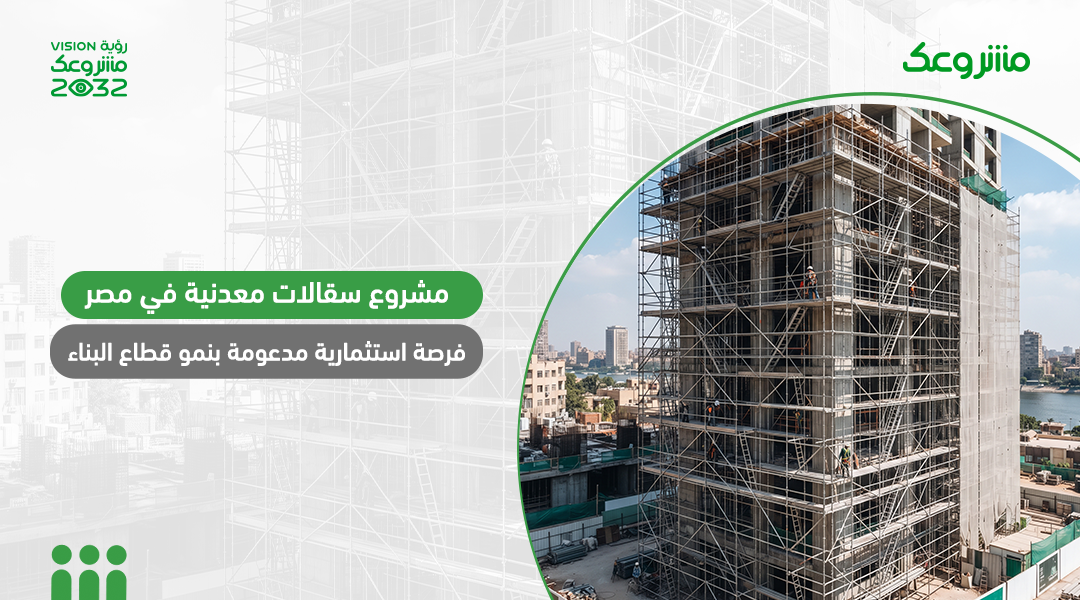
A scaffolding project is considered one of the promising business ventures that has been attracting growing interest recently, particularly with the continuous expansion of the construction and building sector and the increasing demand for safe and efficient solutions for equipping worksites. The importance of this project stems from its ability to provide a range of services, whether by renting scaffolding systems to construction companies or supplying them for construction and finishing projects, creating opportunities for achieving attractive investment returns.
However, the success of a scaffolding project does not depend solely on providing scaffolding systems. It requires a thorough market study, identifying the types in demand, selecting suitable equipment and materials, and accurately estimating the required capital and operating costs. Careful planning and an effective marketing strategy also play a significant role in reaching target customers and building a stable, long-term customer base.
In the following sections, we explore the key aspects of a scaffolding project, including its requirements, costs, and success factors, providing you with a clear perspective to help you make a well-informed investment decision.
A scaffolding project is an industrial and commercial business specializing in the manufacturing, rental, and sale of metal scaffolding used in construction, building, renovation, and maintenance works. Scaffolding provides safe and stable platforms that enable workers to access elevated areas and carry out various tasks efficiently.
The project relies on providing different types and sizes of scaffolding to meet the needs of construction companies, real estate developers, finishing contractors, and maintenance businesses. It can also offer transportation, installation, and dismantling services to create additional revenue streams.
A scaffolding project is directly linked to the construction and building sector and can generate good returns by expanding its customer base and efficiently managing rental and maintenance operations.
Yes, a scaffolding project is considered one of the profitable businesses in the construction and building sector. The global scaffolding market was valued at USD 57.14 billion in 2025 and is projected to grow from USD 59.81 billion in 2026 to USD 79.6 billion by 2034, at a compound annual growth rate (CAGR) of 3.6% over the forecast period.
Read here: Why Residential Apartment Projects Are the Ideal Investment Choice
Read Here: How to Start a Construction Equipment Rental Project in 2026
The cost of establishing a scaffolding project varies depending on the nature of the business, whether it involves manufacturing metal scaffolding, purchasing and renting it out, or selling it. Costs are also affected by the project size, scaffolding types, equipment, and services provided. The main cost items include:
A scaffolding project may require sufficient capital to purchase metal or wooden scaffolding, equipment, and various supplies, particularly when starting operations with large quantities. This challenge can be addressed by starting with quantities that match the expected level of demand and gradually increasing the equipment inventory as the project grows.
A scaffolding project faces competition from businesses offering scaffolding sales and rental services, which may make it more difficult to attract customers during the initial stage. To overcome this challenge, the project should offer competitive prices while maintaining scaffolding quality, providing fast service, and ensuring good customer relations.
Scaffolding may be damaged due to repeated use or improper storage and transportation, resulting in higher maintenance and replacement costs. This can be minimized by conducting regular inspections, cleaning and maintaining the scaffolding after each rental, and storing it properly.
Scaffolding needs to be transported from the project premises to customer sites, and long distances and frequent transportation operations may increase expenses. Therefore, it is preferable to choose a location close to construction areas and organize delivery and collection operations efficiently to reduce transportation time and costs.
The project may face difficulty securing a sufficient number of customers during the initial period due to the lack of an established customer base. This can be addressed through direct communication with construction companies and contractors, digital marketing, and offering suitable deals to new customers.
Scaffolding must be properly installed and used to minimize the risk of accidents at construction sites. Therefore, compliance with safety procedures is an important challenge. This can be addressed by providing high-quality scaffolding, conducting regular inspections, and employing trained workers who are qualified to safely install, dismantle, and use scaffolding.
Demand for scaffolding may vary from one period to another depending on construction sector activity and the number of ongoing projects. To reduce the impact of declining demand, the project can target multiple sectors, including construction, renovation, finishing, and maintenance, rather than relying on a single type of customer.
The variety of scaffolding types and sizes, pipes, couplers, and other components may make inventory management more challenging. This can be addressed by organizing the warehouse, numbering equipment, recording all delivery and return operations, and conducting regular inventory checks to ensure that all components are available.
Scaffolding requires continuous maintenance and inspection, in addition to labor, storage, and transportation costs, which may affect project profitability. This can be managed by monitoring expenses, establishing a preventive maintenance schedule, reducing unnecessary transportation operations, and selecting equipment with an appropriate level of quality and durability.
In light of the urban development and continuous expansion of construction and infrastructure projects in the Arab Republic of Egypt, along with the growing demand for construction equipment, I decided to establish a scaffolding rental and supply business to meet the needs of construction companies. However, I initially faced several challenges that hindered my progress, most notably the lack of proper planning, difficulty securing the necessary financing, as well as technical issues related to selecting the safest and most durable scaffolding systems and specifications, providing adequate storage space, and organizing maintenance procedures.
To address the situation, one of my friends advised me to contact Mashroo3k Consulting, which prepared a professional feasibility study for me. The study included a comprehensive market analysis and an accurate assessment of the financial and structural requirements. It also provided specialized technical consulting that helped me identify scaffolding types and equipment that comply with safety standards and organize the project’s operational processes.
This comprehensive study enabled me to submit a complete financing file tothe Micro, Small and Medium Enterprises Development Agency (MSMEDA) and secure the necessary funding. This directly contributed to overcoming all the challenges, improving the project’s operational efficiency, and bringing it to a stronger level of productivity than before.
Read here: Feasibility Study – Its Importance, How to Prepare It, and How to Conduct a Feasibility Study
The cost of scaffolding rental varies depending on the type and size of the scaffolding, rental period, required quantity, as well as transportation and installation costs and the project’s location. Therefore, there is no fixed price that applies to all cases. It is preferable to determine the project’s requirements first and then obtain a quotation from a supplier or rental company. Rental costs may be calculated on a daily, weekly, or monthly basis, and the rental rate may decrease as the rental period or required quantity increases.
The key scaffolding requirements include ensuring that the scaffolding is strong, stable, and capable of supporting the loads for which it is intended. It should be installed and dismantled by qualified personnel in accordance with the manufacturer’s instructions and applicable safety requirements. The scaffolding bases must be stable and equipped with appropriate protective measures, such as guardrails and safety barriers. Scaffolding should also be inspected regularly, before use, and after any modification, relocation, or conditions that may affect its stability. Work platforms and accessways must be kept in good condition and free from obstructions, and scaffolding must not be loaded beyond its permitted capacity.
There is no single type that can be considered the best for all projects. The appropriate scaffolding depends on the nature of the work, building height, duration of use, and required load capacity. Common types include metal scaffolding, such as steel and aluminum scaffolding, which are known for their durability and versatility across various construction and finishing projects. Wooden scaffolding may also be used for certain applications depending on project requirements. Other specialized types include mobile scaffolding, tower scaffolding, and suspended scaffolding. The appropriate type should be selected based on the nature of the project and applicable safety requirements.
The price of metal scaffolding varies depending on its type, dimensions, material, and thickness, as well as whether it is new or used. Therefore, when preparing a feasibility study for a scaffolding project, it is preferable to calculate the cost based on the required quantity and specifications and compare quotations from multiple suppliers, while also accounting for transportation and installation costs, if applicable.
A scaffolding project represents a promising investment opportunity, particularly with the continued demand for scaffolding services and equipment in construction, building, and finishing projects. However, achieving good results requires proper planning, a thorough understanding of market needs, and the selection of suitable equipment, along with a clear budget covering costs, operations, and marketing.
Maintaining scaffolding quality and complying with safety standards also help build customer trust and establish a strong reputation in the market. Therefore, before launching the project, it is important to prepare a comprehensive study that determines the expected investment, potential returns, and key challenges that may arise. With effective management, strategic marketing, and a commitment to providing reliable services, a scaffolding project can develop into a stable business with strong growth potential and the ability to generate good returns.

Contact us to request a feasibility study for a scaffolding project
The kebab restaurant project is one of the food-service ventures that combines strong demand for grilled meals with the opportunity to target a diverse customer base, including individuals, families, and lovers of traditional Middle Eastern cuisine. With growing competition in the restaurant sector, however, the project’s success is no longer determined by food taste alone. […]
Read moreA children’s toy store project is not limited to selling toys; it is built on understanding what attracts children and what families look for when choosing products that combine entertainment and educational value. With the wide variety of educational toys, skill-development games, recreational toys, and gifts available, the store has opportunities to meet the needs […]
Read moreA residential complex project is no longer simply an investment in a collection of real estate units. It has evolved into an integrated development model that combines comfortable living, diverse services, and long-term investment value. As cities expand and residents’ needs evolve, demand is growing for residential complexes that offer a comprehensive environment suited to […]
Read moreThe veterinary clinic project comes at a time when animal care is no longer limited to treating illnesses or injuries, but has expanded to include health monitoring, vaccinations, routine checkups, and care for both pets and livestock. However, many animal owners face challenges in accessing specialized veterinary services that combine prompt response, high-quality care, and […]
Read more
خصم 25% على خدمات مشروعك استفد من العرض الآن، فالفرصة متاحة لفترة محدودة فقط
سجّل بياناتك واحصل على خصم 25% الآن


