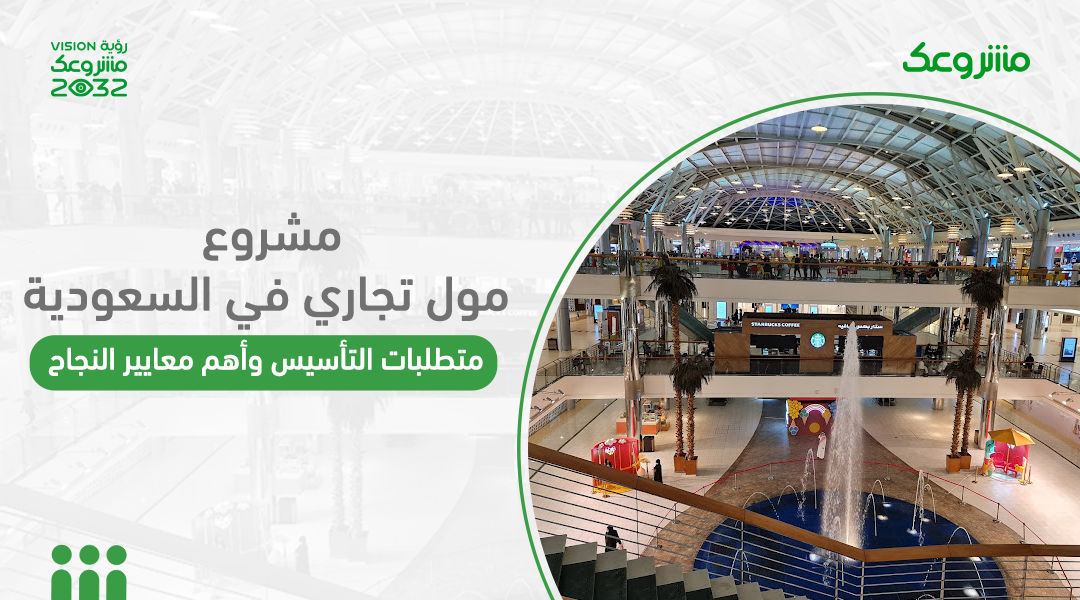
A commercial mall project is considered one of the most attractive investment projects in the commercial real estate sector, given the continuous growth witnessed by this sector, driven by urban expansion, increasing population density, and rising demand for integrated commercial complexes that provide an experience combining shopping, entertainment, restaurants, and various services in one destination. This project is distinguished by its ability to achieve stable cash flows by leasing commercial units and attracting brands and investors, which makes it a long-term investment option. However, achieving success does not depend only on the size of the investment; it requires preparing a comprehensive feasibility study, choosing a strategic location with high traffic, and developing an effective operational and marketing plan that meets the needs of the target market. In this article, we review the concept of a commercial mall project, its most prominent advantages, the most important requirements for its implementation, and the factors that ensure its success and achieving sustainable investment returns.
A commercial mall project is an integrated commercial complex that includes a variety of retail stores, restaurants, cafes, and entertainment and service facilities in one location, with the aim of providing an integrated shopping experience that meets the needs of different groups. The project relies on leasing commercial units to brands and investors, which provides a sustainable source of income for the project owner. The mall is also designed according to the latest engineering and commercial standards, while providing parking lots, security and safety systems, and entertainment spaces that enhance the visitor experience. A commercial mall project is considered a long-term investment project, given its ability to attract large numbers of shoppers and achieve stable financial returns, especially when choosing the right location, managing the project efficiently, and providing a balanced mix of commercial and service activities.
Yes, global economic indicators confirm that a commercial mall project is considered today one of the most prominent promising investment opportunities. This attractiveness is clearly evident in market data, as the size of the global shopping centers market jumped from 6.22 trillion dollars in 2025 to 6.65 trillion dollars in 2026, reflecting a radical shift in consumption patterns and the growing demand for commercial mall products. Studies expect this positive momentum to continue, with the market size reaching about 8.63 trillion dollars by 2030, recording a compound annual growth rate (CAGR) of 6.8% during the forecast period between 2026 and 2030.
Read here: Commercial Sector Report in the Kingdom of Saudi Arabia
Investors turn to investing in a commercial mall project because of the investment advantages the project possesses, foremost among which are the following:
The cost of a commercial mall project varies from one project to another according to a number of factors that directly affect the size of the required investment. Among the most prominent factors that determine the project cost are the following:
A commercial mall project relies on a set of systems and equipment that ensure operational efficiency and provide a safe and comfortable environment for visitors and tenants. The most important of these are the following:
Choosing the right location is one of the most important factors for the success of a commercial mall project, so a set of basic criteria should be taken into account, as follows:
The profits of a commercial mall project can be increased by applying effective operational and marketing strategies that enhance occupancy rates and attract more visitors, foremost among which are the following:
| Challenges | How to overcome them |
| Difficulty choosing the right location | Conducting a market study and choosing a location characterized by population density and ease of access. |
| High construction and equipping costs | Preparing an accurate financial plan and rationalizing expenses without affecting the project’s quality. |
| Low occupancy rates of commercial units | Offering flexible offers to tenants and implementing an effective marketing plan to attract brands. |
| Competition with other commercial malls | Providing a distinctive shopping experience, diversifying activities and services, and attracting strong brands. |
| Weak visitor turnout | Organizing events and promotional offers, and strengthening digital marketing for the mall. |
| High operating and maintenance costs | – Applying preventive maintenance programs and using smart systems to rationalize resource consumption. |
| – Changing market needs | – Following market trends and developing activities and services in line with customer needs. |
| – Difficulty managing facilities and tenants | – Relying on a professional management team and using specialized systems for managing commercial malls. |
| – Technical failures or service interruptions | – Conducting periodic maintenance and providing backup systems for electricity and basic facilities. |
| – Compliance with regulatory requirements and regulations | – Obtaining all licenses and adhering to security and safety standards and applicable regulations. |
Read here: Risk management in projects: What is it, what is its importance, and how can it be implemented?
| The element | The analysis |
| Strengths | A long-term investment asset. Diversification of revenue sources. High demand for commercial spaces. The ability to attract well-known brands. An increase in the property’s market value over time. |
| Weaknesses | High construction and operation costs. The need for large capital. The long period for recovering capital. Dependence on commercial unit occupancy rates. The need for professional management and operation. |
| Opportunities | Urban expansion and increasing population density. The growth of the retail sector. The rising demand for modern commercial complexes. The possibility of adding new entertainment and service activities. Attracting local and international investments and brands. |
| Threats | اCompetition with other commercial malls. Economic changes that may affect purchasing power. The growth of e-commerce. High operating and maintenance costs. Changes in regulations and regulatory requirements. |
Read Here: Everything You Need to Know About SWOT Analysis and How It Is Applied
“When I made the decision to invest in a commercial mall project in Riyadh, I realized that the success of the project requires more than just the availability of capital; it needs a clear vision and professional planning that ensures achieving its goals in the long term. At the beginning of implementation, I faced fundamental challenges, most notably preparing an integrated feasibility study, setting an accurate operational plan, in addition to securing the necessary funding to implement the project according to the highest standards. From here, my choice fell on Mashroo3k Consulting Company, which undertook the preparation of a comprehensive feasibility study covering all marketing, technical, financial, and administrative aspects, and provided me with a clear vision of the implementation stages, expected costs, investment returns, and potential risks, which gave me the confidence to make well-studied investment decisions. The company’s role was not limited to preparing the study; it extended to providing support in financing procedures, as the work team helped me complete the requirements and prepare the necessary files, until I was able to obtain financing from the Social Development Bank with ease. Thanks to this integrated support, the project launched according to a well-studied plan, with more efficient financial and operational management, which enhanced its readiness to compete and put it on the path to success and achieving sustainable investment returns.”
A mall is a large commercial complex that includes a variety of retail stores, restaurants, cafes, and service and entertainment facilities in one place. It aims to provide an integrated shopping experience that meets the needs of visitors. The mall is characterized by its modern design, the diversity of activities it includes, and the provision of services such as parking, security systems, and entertainment areas, which makes it an integrated destination for shopping, entertainment, and spending time.
The conditions for building a commercial mall vary from one country to another according to the regulations and laws governing investment and construction. However, there is a set of basic requirements that are indispensable to ensure the project is implemented legally and safely. These requirements include choosing land designated for commercial use, obtaining the necessary licenses and approvals from the competent authorities, and preparing approved engineering plans that comply with the building code and regulatory requirements. An integrated infrastructure must also be provided, including electricity, water, drainage, and communications networks, in addition to adhering to security and safety standards, such as fire fighting systems, emergency exits, parking lots, and facilities for people with disabilities. Adhering to these conditions is an essential step to ensure the efficient operation of the mall and to provide a safe and comfortable environment for tenants and visitors.
A commercial mall project consists of a set of basic components that ensure its success and provide an integrated shopping experience for visitors. These components include commercial units designated for various activities, restaurants and cafes, and entertainment areas, in addition to a supermarket or hypermarket that is considered a main attraction. The project also includes spacious parking lots, corridors and common areas that facilitate visitor movement, in addition to elevators and escalators that connect the floors. The commercial mall is not complete without providing restrooms and service facilities, and security and safety systems, such as surveillance cameras and fire fighting systems, as well as management and maintenance rooms, guiding signs, customer service offices, and all facilities that ensure the efficient operation of the project and provide a comfortable and safe environment for tenants and visitors.
The types of commercial malls vary according to their size, the nature of the activities they include, and the target group, which gives investors multiple options that suit their investment goals and market needs. The most prominent of these types include regional malls that include a large number of stores and brands, community malls that serve neighborhoods and residential areas, specialized malls that focus on a specific activity such as furniture, electronics, or fashion, in addition to open malls that rely on a design that allows outdoor shopping, and mixed-use malls that combine retail stores, restaurants, administrative offices, and hotel or residential units, to provide an integrated destination that brings together shopping, entertainment, and services in one place.
The foundations of commercial mall design depend on achieving a balance between aesthetic and functional aspects, in a way that ensures providing a comfortable and attractive shopping experience for visitors. This begins with choosing a design that facilitates movement between stores, with the distribution of commercial units in a manner that achieves the highest footfall rates. Clear entrances and exits, wide corridors, and sufficient parking spaces must also be provided, in addition to allocating spaces for restaurants, cafes, and entertainment areas. Attention should also be given to providing appropriate lighting and ventilation, installing elevators and escalators in strategic locations, and adhering to security and safety standards, such as fire fighting systems and emergency exits. The use of guiding signs, green spaces, and seating areas also contributes to improving the visitor experience and increasing the length of their stay inside the mall, which enhances the project’s chances of success and achieving high investment returns.
It can be said that a commercial mall project represents one of the most promising investments in the commercial real estate sector, thanks to its ability to achieve sustainable financial returns and diversify income sources, along with the growing demand for integrated commercial centers that combine shopping, entertainment, and services in one destination. However, the success of the project is not achieved by relying on capital alone; it requires preparing a comprehensive feasibility study, choosing a strategic location, and a design that meets market requirements, in addition to professional management and operation that contribute to attracting tenants and visitors and enhancing the mall’s competitiveness. The more accurate the planning and the more professional the implementation, the greater the project’s chances of success, achieving stable investment returns, and building a commercial destination capable of growth, sustainability, and keeping pace with market developments in the long term.

To contact us and request a feasibility study for a commercial mall project
The kebab restaurant project is one of the food-service ventures that combines strong demand for grilled meals with the opportunity to target a diverse customer base, including individuals, families, and lovers of traditional Middle Eastern cuisine. With growing competition in the restaurant sector, however, the project’s success is no longer determined by food taste alone. […]
Read moreA children’s toy store project is not limited to selling toys; it is built on understanding what attracts children and what families look for when choosing products that combine entertainment and educational value. With the wide variety of educational toys, skill-development games, recreational toys, and gifts available, the store has opportunities to meet the needs […]
Read moreA residential complex project is no longer simply an investment in a collection of real estate units. It has evolved into an integrated development model that combines comfortable living, diverse services, and long-term investment value. As cities expand and residents’ needs evolve, demand is growing for residential complexes that offer a comprehensive environment suited to […]
Read moreThe veterinary clinic project comes at a time when animal care is no longer limited to treating illnesses or injuries, but has expanded to include health monitoring, vaccinations, routine checkups, and care for both pets and livestock. However, many animal owners face challenges in accessing specialized veterinary services that combine prompt response, high-quality care, and […]
Read more
خصم 25% على خدمات مشروعك استفد من العرض الآن، فالفرصة متاحة لفترة محدودة فقط
سجّل بياناتك واحصل على خصم 25% الآن


