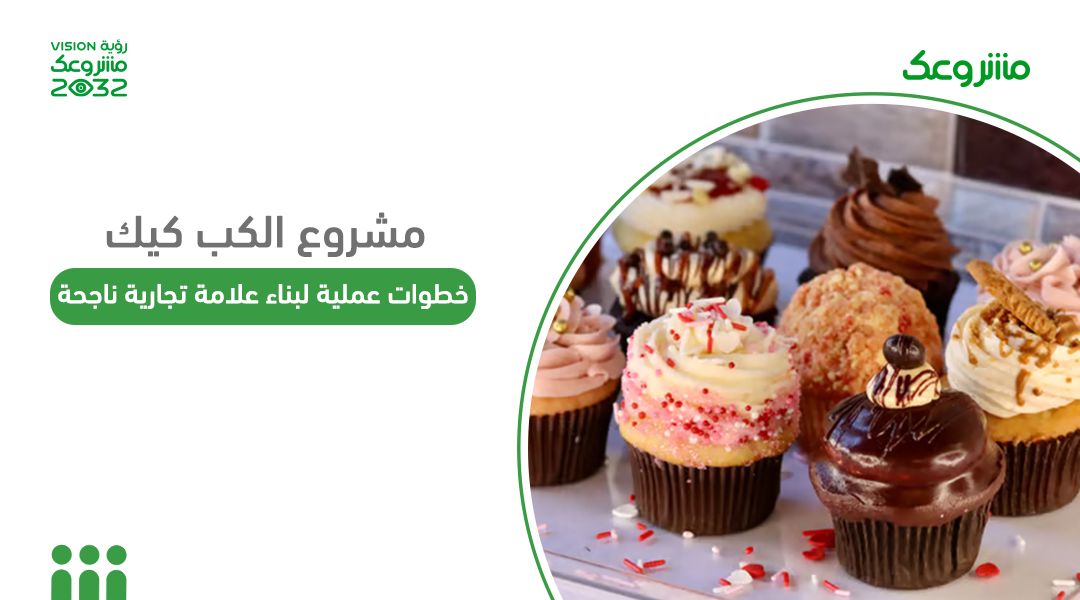
A cupcake project is considered one of the most attractive and sustainable investment opportunities in the food and confectionery sector, as demand for cupcakes continues to grow significantly, driven by consumers’ preference for innovative, convenient, easy-to-carry and consume desserts featuring unique flavors and a distinctive sensory experience. It is worth noting that the success of the project depends not only on taste quality, but primarily on the precise strategic integration of several interconnected elements. This begins with selecting high-quality ingredients and developing innovative recipes that meet contemporary market trends, such as healthy, gluten-free, or plant-based options, followed by conducting a comprehensive feasibility study that analyzes market size, competition, and target segments, and ultimately building an attractive visual identity that reflects creativity and distinction. The project also requires efficient production processes that ensure consistent quality and high standards of hygiene, along with a focus on creative marketing strategies that combine digital marketing, influencer collaborations, and partnerships with cafés, in addition to effective financial management.
The cupcake project represents a golden opportunity for ambitious investors who have a clear vision and the ability to execute in an organized manner, as it combines attractive financial returns, operational flexibility, and the potential for sustainable growth in a food market characterized by consistent demand and unlimited variety.
A cupcake project is a business activity specializing in the production and sale of individual desserts that combine high quality, exceptional taste, and attractive visual design. The project is distinguished by offering a wide variety of flavors and innovative designs suitable for different tastes and occasions. The project is built on key pillars, including the use of high-quality raw ingredients, strict adherence to food safety and hygiene standards, and continuous product development to keep pace with the latest trends in the confectionery industry and changing market needs. The project’s objectives are centered on providing an integrated customer experience that goes beyond the product itself to include a distinctive visual identity, a well-planned marketing strategy, and the development of a strong brand capable of competing, expanding, and achieving sustainability in a dynamic business environment.
Yes, a cupcake project is considered a successful and profitable venture, and several statistical indicators support this. According to reports byData Bridge Market Research, the global cupcake market was valued at USD 2.99 billion in 2024 and is expected to reach USD 4.36 billion by 2032, registering a compound annual growth rate (CAGR) of 4.80% during the period from 2025 to 2032.
A cupcake project offers several advantages that make it an attractive investment opportunity in the confectionery sector. The most notable advantages include:
Please read here: Mini Cake Project: Steps to Success and Profit Secrets in the Confectionery Industry
The cost of a cupcake project varies depending on its size, production capacity, services offered, and geographical location. The main costs can be distributed across the following items:
To start a cupcake project professionally, it is recommended to follow the steps below:
Please read here: Marketing Feasibility Study: Definition, Importance, Preparation Method, and Key Tools
Read here: 7 Essential Elements Underpinning the Technical Feasibility Study of Projects
Read here: The Importance of Having a Financial Feasibility Study for Your Investment Project
Ultimately, the feasibility study does not merely identify the potential risks associated with the cupcake project; rather, it focuses practically on outlining preventive measures and procedures to avoid these risks or mitigate their impact. Instead of simply listing challenges, such as intense competition from major brands (marketing risk), fluctuations in raw material prices (financial risk), or inconsistent product quality and equipment breakdowns (technical risk), the study provides proactive solutions aimed at mitigating these risks or avoiding them entirely. The final report concludes that the project represents a promising investment opportunity, given its relatively low initial costs and sustained demand both locally and regionally.
Read here: Feasibility Study – Its Importance, How to Prepare It, and How to Conduct a Feasibility Study
For More Information on the Requirements for Bakery and Confectionery Projects, Click Here
To ensure the success and sustainability of a cupcake project in the market, the following guidelines should be followed:
The average cost of a box containing 12 cupcakes is influenced by several key factors, most notably the quality of raw ingredients, the level of creativity in decoration, operating costs, and the brand’s market positioning. Generally, the overall cost of the product increases as the levels of quality, precision in execution, and visual distinction in design increase.
Yes, a cake project is considered a highly viable and profitable business, provided that it is professionally managed within a well-planned framework. Its profitability depends directly on three key factors: controlling operating costs, offering a distinctive product in terms of quality and design, and implementing an effective marketing strategy that accurately targets the market.
The price of a cupcake varies according to several key factors, most notably the flavor, the complexity and sophistication of the decoration, the presentation and packaging style, and the nature of the target segment. The brand name and the overall experience provided to the customer also play a pivotal role in determining the final price.
The cost of a cupcake is accurately calculated by adding the total direct and indirect costs associated with production, including the cost of raw ingredients, operating and production expenses, and packaging costs, in addition to administrative and marketing expenses. This total is then divided by the number of units produced to determine the actual cost per unit, enabling the project to establish an appropriate profit margin and ensure financial viability.
The choice between purchasing ready-made cupcakes and producing them in-house depends on the intended purpose. For personal use or when saving time and effort is a priority, purchasing from external sources may be the more suitable option. However, in a commercial business context, in-house production provides greater control over ingredient quality, decoration standards, and production costs, contributing to higher operational efficiency, a consistent product identity, and improved profit margins.
The shelf life of cupcakes in the refrigerator varies depending on the ingredients used and storage method. However, this period is generally relatively limited in order to preserve their original flavor and optimal quality. To ensure a distinctive consumption experience, it is recommended to serve cupcakes within a short period after preparation, particularly when they contain fresh ingredients or cream that is sensitive to storage.
There is no absolute answer as to which is better between cupcakes and traditional cake, as the choice depends on the intended purpose. Cupcakes are characterized by their individual serving size, ease of serving, and high degree of customization, making them an ideal choice for small occasions or personal gifts. In contrast, traditional cake remains more suitable for large occasions and formal celebrations due to its size and communal nature. Each has its own target audience and specific uses, giving both a distinctive position in the confectionery market.
The taste of cupcakes differs from that of traditional cake because they are baked in small individual molds, which increases browning around the edges and intensifies the flavor, often resulting in a sweeter taste. In addition, recipes commonly use higher proportions of sugar and fat, giving cupcakes a softer texture and a richer sense of sweetness. The thick frosting that fully covers the surface also adds a strong layer of flavor, whereas cake is typically served with less frosting or without it, resulting in a more balanced and moderate taste.
Cupcakes are among the desserts characterized by relatively quick preparation compared with other types of cake, thanks to their small size and short baking time. This feature represents a practical and competitive advantage in professional environments, as it enables faster production and greater flexibility in meeting orders while maintaining product quality and consistency.
In conclusion, a cupcake project can be considered a promising investment opportunity that combines artistic creativity with economic viability, making it an attractive option for entrepreneurs in the food sector. The success of this project does not depend solely on distinctive flavor; rather, it relies heavily on precise strategic planning, a deep understanding of consumer behavior, and the effective ability to build a distinctive and trusted brand.
If you are seeking to build a business capable of growth, expansion, and generating sustainable returns, cupcakes offer an ideal platform to achieve this. Start today with a well-planned step based on a comprehensive feasibility study, and transform your investment idea into a successful business reality.

For Inquiries and to Request a Feasibility Study for a Cupcake Project
The kebab restaurant project is one of the food-service ventures that combines strong demand for grilled meals with the opportunity to target a diverse customer base, including individuals, families, and lovers of traditional Middle Eastern cuisine. With growing competition in the restaurant sector, however, the project’s success is no longer determined by food taste alone. […]
Read moreA children’s toy store project is not limited to selling toys; it is built on understanding what attracts children and what families look for when choosing products that combine entertainment and educational value. With the wide variety of educational toys, skill-development games, recreational toys, and gifts available, the store has opportunities to meet the needs […]
Read moreA residential complex project is no longer simply an investment in a collection of real estate units. It has evolved into an integrated development model that combines comfortable living, diverse services, and long-term investment value. As cities expand and residents’ needs evolve, demand is growing for residential complexes that offer a comprehensive environment suited to […]
Read moreThe veterinary clinic project comes at a time when animal care is no longer limited to treating illnesses or injuries, but has expanded to include health monitoring, vaccinations, routine checkups, and care for both pets and livestock. However, many animal owners face challenges in accessing specialized veterinary services that combine prompt response, high-quality care, and […]
Read more
خصم 25% على خدمات مشروعك استفد من العرض الآن، فالفرصة متاحة لفترة محدودة فقط
سجّل بياناتك واحصل على خصم 25% الآن


