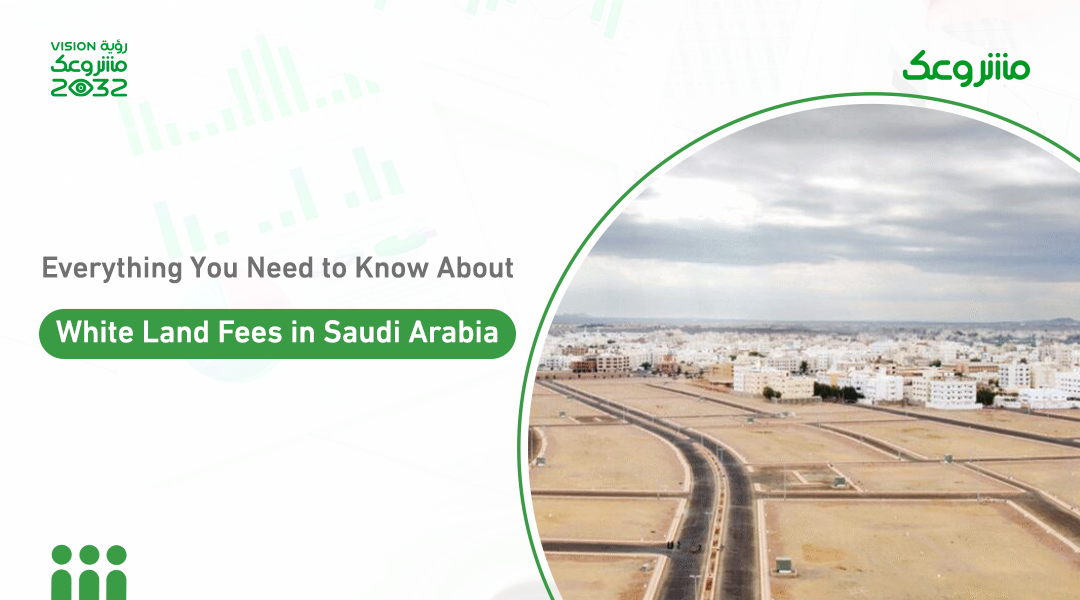
Saudi Vision 2030 and White Land Fees: Full Overview
Saudi Arabia’s Vision 2030 is built on three core pillars: a vibrant society, a thriving economy, and an ambitious nation. The “Vibrant Society” pillar, in particular, includes several key targets, such as: facilitating access to healthcare services, increasing life expectancy from 74 to 80 years, raising the social capital index from rank 26 to rank 10, diversifying and improving entertainment options to meet residents’ needs, and enhancing the efficiency and effectiveness of social services.
A central target under this pillar is enabling Saudi families to own suitable housing, raising the homeownership rate from 47% to over 60%. The Kingdom successfully achieved this goal, and the target was later increased to 70% by the end of 2030. The national housing program has been a critical strategy in boosting homeownership, and White Land Fees have been one of the key tools supporting this objective.
But what exactly are White Land Fees? How are they applied, and what are the stages of implementation? The following provides a detailed explanation.
A real estate tax imposed by the Saudi government on owners of undeveloped land (i.e., land without buildings or commercial use) within urban areas.
The fees were officially applied in Saudi Arabia in August 2025, following updates to the fee system aimed at promoting urban development and encouraging land investment within urban boundaries.
For more information about the Executive Regulations of the White Land Fees System, click here.
Stage 1:
Stage 2:
Stage 3:
Note: If a stage is insufficient to balance supply and demand, authorities may skip to a later stage while still applying fees for completed previous stages.
Maps have been published, e.g., for Riyadh, showing the geographic application of these fees based on priority levels.
You can view the map by clicking here
Read here: Off-Plan Sales… A New Vision Redefining the Real Estate Investment Market
What are white lands?
Undeveloped lands within urban boundaries that are technically suitable for construction but remain unused, prompting the government to impose fees to stimulate development or sale.
Read here: From Empty Land to Growing Value… The Future of White Lands in 2025
What land sizes are subject to fees?
Fees apply to lands 5,000 sqm or more, or to the total area owned by one owner in a city if it reaches 5,000 sqm.
How can I check if a land is subject to fees?
Use the official White Land Fees portal via the Absher national ID system to check the status using the land deed number.
Who is exempt from fees?
This government regulation aims to organize the use of undeveloped lands in urban areas, stimulate development, increase supply, control prices, and balance housing market demand.
| Aspect | Old Law | Updated Law |
|---|---|---|
| Geographic Scope | Limited cities (Riyadh, Jeddah, Dammam) | Detailed city maps with priority zones |
| Fee Rate | 2.5% annually | Up to 10% based on location, land type, duration of non-development, and development priority |
| Covered Land Types | Residential or commercial within urban plans | Any undeveloped land “suitable for development” |
| Minimum Land Size | Large plots only | 5,000 sqm for undeveloped land |
| Vacant Properties | Exempt | Annual fee for long-unused buildings based on rental value |
| Goal | Reduce land hoarding | Maximize land use, increase supply, and balance market |

For inquiries regarding White Land Fees and to learn more about Mashroo3k Company and its services
The kebab restaurant project is one of the food-service ventures that combines strong demand for grilled meals with the opportunity to target a diverse customer base, including individuals, families, and lovers of traditional Middle Eastern cuisine. With growing competition in the restaurant sector, however, the project’s success is no longer determined by food taste alone. […]
Read moreA children’s toy store project is not limited to selling toys; it is built on understanding what attracts children and what families look for when choosing products that combine entertainment and educational value. With the wide variety of educational toys, skill-development games, recreational toys, and gifts available, the store has opportunities to meet the needs […]
Read moreA residential complex project is no longer simply an investment in a collection of real estate units. It has evolved into an integrated development model that combines comfortable living, diverse services, and long-term investment value. As cities expand and residents’ needs evolve, demand is growing for residential complexes that offer a comprehensive environment suited to […]
Read moreThe veterinary clinic project comes at a time when animal care is no longer limited to treating illnesses or injuries, but has expanded to include health monitoring, vaccinations, routine checkups, and care for both pets and livestock. However, many animal owners face challenges in accessing specialized veterinary services that combine prompt response, high-quality care, and […]
Read more
خصم 25% على خدمات مشروعك استفد من العرض الآن، فالفرصة متاحة لفترة محدودة فقط
سجّل بياناتك واحصل على خصم 25% الآن


