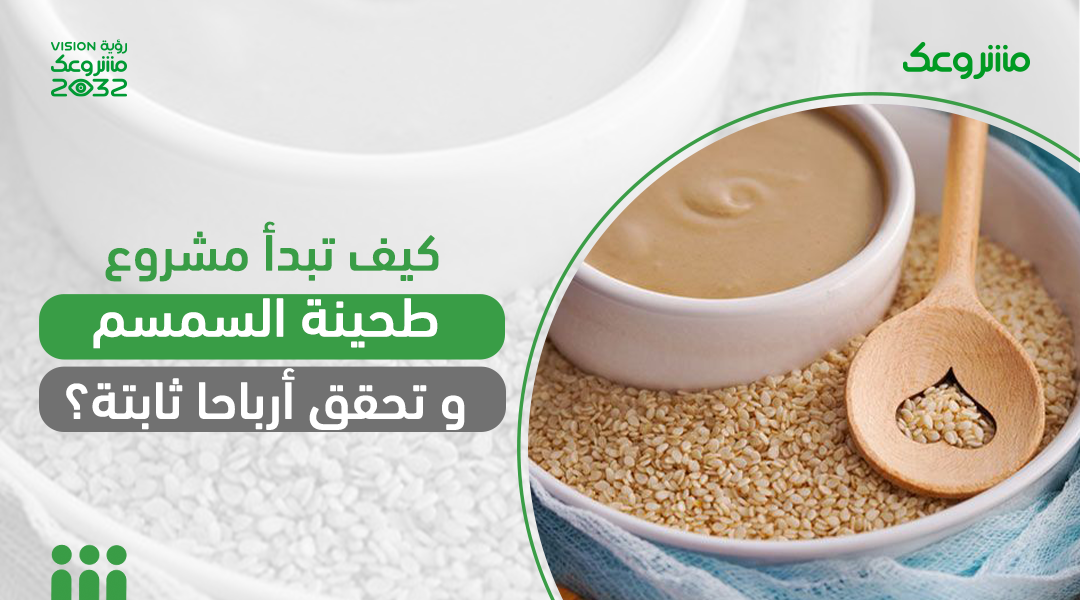
هذا النص هو مثال لنص يمكن أن يستبدل في نفس المساحة، لقد تم توليد هذا النص من مولد النص العربى، حيث يمكنك أن تولد مثل هذا النص أو العديد من النصوص الأخرى إضافة إلى زيادة عدد الحروف التى يولدها التطبيق.
The sesame tahini project represents a promising investment opportunity in the food manufacturing sector, as it combines ease of implementation with strong, deeply rooted demand in both local and global markets. With the growing trend toward natural and healthy products, tahini has gained a dual position: it is a well-established traditional food heritage and, at the same time, an essential ingredient on daily dining tables—ensuring its consistent presence in consumers’ baskets. Moreover, the availability of sesame seeds and the ability to transform them into a high value-added product make this project an ideal choice for small and medium investors seeking safe and rewarding returns. In this comprehensive guide, we will walk you step by step through every stage of the project—from conducting a feasibility study and selecting the right equipment to structuring costs, as well as exploring marketing strategies and key success factors that will help you build a profitable and sustainable business.
What is a sesame tahini project?
The sesame tahini project is considered one of the most promising food manufacturing ventures, as it is based on converting raw sesame seeds into smooth, high-quality tahini. This product is widely used as a key ingredient in a variety of dishes, ranging from salads and appetizers to sandwiches and traditional desserts. The production cycle in this project relies on precise stages, including cleaning the sesame seeds, roasting them at controlled temperatures, and then grinding them using specialized equipment to achieve a smooth texture and a rich flavor that meets the highest quality standards. The sesame tahini project is characterized by high flexibility and scalability, as it can be launched as a small-scale business with limited resources or gradually expanded into a fully integrated commercial facility with modern machinery and higher production capacities.
The global sesame tahini market reflects positive growth indicators that enhance the viability of investing in this sector. It is estimated at around USD 453.65 million in 2026, compared to USD 437.8 million in 2025, with expectations of rising to USD 541.96 million by 2031, at a compound annual growth rate (CAGR) of 3.62% during the period (2026–2031). These figures highlight the increasing global demand for tahini as a staple and versatile food product, making the sesame tahini project a promising investment opportunity with stable profitability and steady growth potential, driven by rising market trends.
What are the advantages of investing in a sesame tahini project?
Continuous and stable demand throughout the year, as tahini is considered a staple food product.
Simple manufacturing process with clear production steps and relatively basic equipment.
Ability to start with low capital and expand gradually over time.
Good profit margins due to the low production cost compared to the selling price.
Multiple uses of tahini in various foods, which increases overall demand.
High scalability, allowing the project to grow from a small business into a larger factory with advanced capabilities.
Diversified sales channels, including retail stores, restaurants, and online platforms.
A healthy food product rich in beneficial nutrients, which increases consumer demand.
Lower risk level due to stable demand and straightforward operational processes.
Easy storage for suitable periods without spoilage when properly preserved.
Fast capital turnover due to strong demand and ease of marketing the product.
What are the success and sustainability factors of a sesame tahini project?
Choosing a strategic location that ensures easy access and facilitates distribution and penetration into target markets.
Using high-quality raw materials such as fresh sesame seeds and natural oils to ensure a superior product.
Adhering to production and quality standards to deliver healthy tahini that meets customer expectations.
Hiring trained workers and specialized technicians to ensure efficient and smooth production processes.
Developing an integrated production line that meets market needs and allows for future expansion.
Effectively marketing the product through multiple channels, including retail stores, restaurants, and digital platforms.
Diversifying products such as salted tahini, organic tahini, or blended variations to meet different consumer preferences.
Providing excellent customer service to build consumer loyalty and increase repeat sales.
Implementing strong financial management by monitoring costs and revenues to ensure sustainable profit margins.
Continuous innovation in packaging and promotion to attract customers and enhance competitiveness in the market.
Regularly monitoring the market and competitors to identify new opportunities and adapt quickly to changes.
Complying with legal and health regulations to ensure business continuity and avoid penalties and risks.
From a sesame seed to a leading industrial enterprise: the success story of (Eng. A) with Mashroo3k.
(Eng. A) began with a clear ambition: to establish a fully integrated sesame tahini production plant with international standards that could compete with imported products while preserving authenticity in the food market. Amid the growing demand for natural and healthy products, the opportunity appeared promising; however, funding challenges and complex banking procedures stood as a barrier between vision and reality.
He did not step back in the face of this challenge. Instead, he moved toward a strategic partnership with “Mashroo3k Consulting Company,” which conducted an in-depth study of his case and transformed his idea into a professional business plan and a comprehensive financing file that met all the requirements of the Saudi Industrial Development Fund. This collaboration soon resulted in securing the financing approval, which marked the real turning point in his journey.
Today, that empty piece of land has been transformed into a fully operational industrial facility, producing high-quality tahini for the market. The story of (M.A.) stands as a model proving that success is not built on product quality alone, but also requires an expert partner who can turn an idea into a real project and tangible industrial achievement.
Frequently asked questions about the sesame tahini project.
How many kilograms of tahini are produced from one kilogram of sesame seeds?
From one kilogram of sesame seeds, approximately 600 to 800 grams of tahini can be produced. This varies depending on the oil content of the sesame and the roasting and grinding method. The higher the quality of the sesame and its oil content, the greater the yield of tahini, making the selection of premium sesame essential for producing an optimal product.
What is the price of a sesame tahini machine?
The prices of tahini machines vary depending on size and production capacity. Small-scale projects can use simple machines, while commercial projects require medium-sized machines or complete production lines. Prices also differ based on the manufacturer and technical specifications, so it is best to compare several options before purchasing to ensure selecting a machine that suits the project’s needs.
What are the ingredients of sesame tahini?
Traditional tahini is mainly made from roasted sesame seeds, with a small amount of salt sometimes added depending on the type. Some recipes may also include a little sesame oil, peanut, or flour to reduce cost or improve texture and flavor. In premium products, additional natural ingredients such as honey or special flavors may be included, but the base ingredient always remains roasted sesame seeds.
What is the price of a kilogram of sesame tahini today?
The price of a kilogram of tahini varies depending on quality, packaging type, and the region where it is sold. Regular tahini is typically priced at a moderate level in local markets, while organic or premium tahini is sold at a higher price, with prices fluctuating based on supply and demand.
What is the best type of sesame for making tahini?
The best type of sesame for producing high-quality tahini is long-grain white sesame, as it provides a smooth texture and a distinctive light color. Therefore, it is important to ensure that the sesame is clean, free from moisture and mold, and rich in natural oils to guarantee the production of tahini with excellent taste and a smooth consistency.
In conclusion of our article on the sesame tahini project.
The sesame tahini project is not merely a traditional inherited idea; rather, it is an integrated investment opportunity built on three strong pillars: continuous market demand, relative ease of implementation, and real potential for expansion and growth. When combined with well-structured planning, careful selection of equipment, strict adherence to quality standards, and an effective marketing strategy, this project can be transformed into a stable and sustainable source of income. The ideal approach to entering this field is to start with calculated and gradual steps while remaining open to continuous development. It is also worth noting that success in such projects does not depend solely on capital, but extends to determination, innovation, and the ability to build genuine trust with customers through a product that meets and exceeds their expectations.
For inquiries and to request a feasibility study for a sesame tahini project
The kebab restaurant project is one of the food-service ventures that combines strong demand for grilled meals with the opportunity to target a diverse customer base, including individuals, families, and lovers of traditional Middle Eastern cuisine. With growing competition in the restaurant sector, however, the project’s success is no longer determined by food taste alone. […]
A children’s toy store project is not limited to selling toys; it is built on understanding what attracts children and what families look for when choosing products that combine entertainment and educational value. With the wide variety of educational toys, skill-development games, recreational toys, and gifts available, the store has opportunities to meet the needs […]
A residential complex project is no longer simply an investment in a collection of real estate units. It has evolved into an integrated development model that combines comfortable living, diverse services, and long-term investment value. As cities expand and residents’ needs evolve, demand is growing for residential complexes that offer a comprehensive environment suited to […]
The veterinary clinic project comes at a time when animal care is no longer limited to treating illnesses or injuries, but has expanded to include health monitoring, vaccinations, routine checkups, and care for both pets and livestock. However, many animal owners face challenges in accessing specialized veterinary services that combine prompt response, high-quality care, and […]