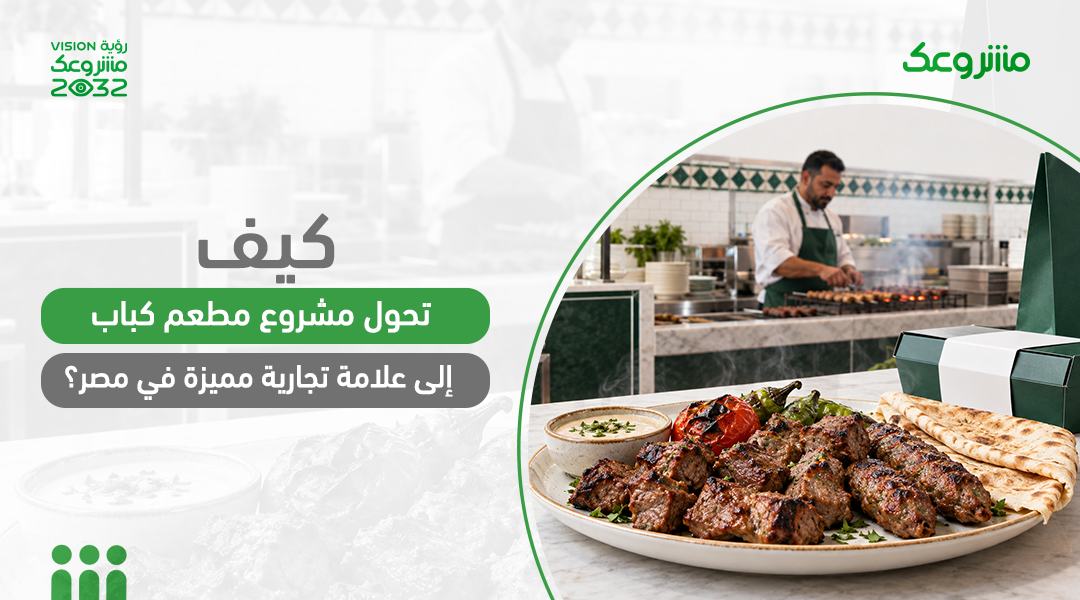
The kebab restaurant project is one of the food-service ventures that combines strong demand for grilled meals with the opportunity to target a diverse customer base, including individuals, families, and lovers of traditional Middle Eastern cuisine. With growing competition in the restaurant sector, however, the project’s success is no longer determined by food taste alone. It also depends on meat quality, the selection of suitable marinades, menu variety, fast order service, and providing a distinctive dining experience that encourages customers to return.
Success begins with choosing a location close to residential communities and high-traffic areas, while setting prices that match the target customers and their purchasing power. Before launching the project, a kebab restaurant feasibility study helps assess market demand, identify the required equipment and workforce, and estimate expected costs and revenues. This gives investors a clearer basis for making informed decisions and building a competitive, sustainable business.
The kebab restaurant project involves establishing a food-service business specializing in grilled meats and traditional Middle Eastern dishes, with a focus on preparing various types of kebab using fresh meat, distinctive marinades, and grilling techniques that preserve food quality and flavor. The project relies on offering a diverse menu that includes kebab, kofta, tarb (grilled lamb fat-wrapped meat), appetizers, salads, and side dishes to cater to different customer preferences. The restaurant can also combine dine-in services with takeaway and delivery options to expand its customer reach and boost sales.
Read also: [Butcher Shop Project: An Investment Opportunity with Stable Year-Round Demand]
The kebab restaurant project is one of the food-service ventures worth studying and investing in, given the projected growth of the global kebab market. Estimates indicate that the market was valued at USD 98.6 billion in 2025 and is expected to reach USD 172.4 billion by 2034, growing at a compound annual growth rate (CAGR) of 6.4% between 2026 and 2034. These indicators reflect growth opportunities in the restaurant sector, particularly for businesses specializing in grilled foods, amid increasing interest in meat quality, menu variety, and distinctive flavors. However, achieving attractive returns requires analyzing the target market, choosing a suitable location, setting prices carefully, and accounting for operating costs and competition to ensure the project’s sustainability.
Investors are drawn to the kebab restaurant project for several reasons, including:
Read Here: Why Is Investing in a Butcher Shop Considered a Profitable Investment Opportunity?
The meat market in Egypt is witnessing developments that reflect sustained demand for meat products and meals made from them, providing an important indicator when assessing investment opportunities in a kebab restaurant project. The Egyptian meat market was valued at USD 5.1 billion in 2025 and is expected to reach USD 6 billion by 2034, growing at a compound annual growth rate (CAGR) of 1.76% between 2026 and 2034.
These indicators help provide an initial understanding of the sector’s size. However, evaluating the restaurant’s business potential requires studying actual demand for grilled foods, analyzing meat prices and operating costs, and identifying competitors and customer preferences in the target area. This supports the development of an appropriate menu and pricing strategy while enhancing the project’s potential to generate sustainable returns.
Read also: [How to Achieve the Highest Profit Margins from a Frozen Food Storage Facility Project in the Local Market?]
Read here: Everything You Need to Know About SWOT Analysis and How to Apply It
I have always been intrigued by how some kebab restaurants manage to retain their customers for years, not only because of the taste of their food, but also because of their ability to deliver a complete dining experience that keeps customers coming back. This inspired me to consider launching a kebab restaurant project in Egypt. However, I soon realized that turning this idea into a successful business required more than simply choosing recipes and a location.
I faced several challenges, including identifying the target customer segment, selecting the most suitable location, and designing a menu that offers variety without increasing food waste. I also needed to determine the required equipment, staffing, and daily operating needs. In addition, I wanted to gain a better understanding of the competition and identify the factors that could give my restaurant a genuine competitive advantage in the market. For this reason, I sought the expertise of Mashroo3k Consulting to prepare… A comprehensive feasibility study helped me analyze the market, customers, and competitors, identify the project’s requirements and equipment, and develop a clear plan for operations, marketing, and resource management. Once the study was completed, I had a much clearer picture of the project, enabling me to prioritize effectively and take implementation steps based on reliable information and analysis rather than relying solely on assumptions.
Read also: [Feasibility Study: Definition, Objectives, Steps, Components, and Template]Frequently Asked Questions About the Kebab Restaurant Project
A kebab restaurant project requires a range of essential raw materials for food preparation, primarily fresh meat, spices, seasonings, onions, and garlic. It also requires vegetables, bread, rice, ingredients for salads and appetizers, and sauces such as tahini, in addition to oils, ghee, and beverages. Furthermore, the project needs operating and packaging supplies for takeaway orders, as well as cleaning and sanitizing products to maintain food quality, restaurant hygiene, and a safe working environment.
The kebab preparation process begins with selecting suitable meat, inspecting it, and preparing it for cooking. The meat is then cut or minced according to the type of kebab, and the specified spices and recipe ingredients are added and thoroughly mixed until well combined. Next, the meat is shaped into the appropriate portions and prepared for grilling. It is then placed on the grill and cooked with careful control of temperature and cooking time to ensure it is thoroughly cooked while retaining its tenderness and flavor. Once grilled, the kebab is served immediately with bread, salads, appetizers, and sauces according to the restaurant’s menu, while maintaining proper hygiene and food safety practices throughout every stage of preparation.
The restaurant’s profit margin varies depending on sales volume, raw material costs, rent, labor, energy, marketing, food waste, and the nature of the menu. Therefore, there is no fixed profit margin that applies to all restaurants. The actual profit margin is determined by comparing total revenue with direct and operating expenses, while taking into account customer demand and the average order value.
We can see that a project’s success is no longer determined solely by offering a product that customers love, but also by the ability to build a business that understands the market, responds to customer expectations, and operates according to a clear vision. Choosing the right location, selecting the products, maintaining the quality of raw materials, managing daily operations, and implementing effective marketing strategies are all interconnected decisions that can make a real difference in the project’s future.
That is why the most important step before renting a location or purchasing equipment is to determine whether your idea is viable and what it will take to compete and remain sustainable. A feasibility study provides the answers through an analysis of the project’s market, technical, operational, financial, and marketing aspects, offering a clear picture of its requirements, opportunities, and challenges.
Therefore, if you have an idea for a kebab restaurant project, do not leave its success to trial and error. Request a feasibility study from Mashroo3k Consulting and take your first step with a plan grounded in research and analysis before making your investment decision.

Contact Us to Request a Feasibility Study for a Kebab Restaurant Project.
The kebab restaurant project is one of the food-service ventures that combines strong demand for grilled meals with the opportunity to target a diverse customer base, including individuals, families, and lovers of traditional Middle Eastern cuisine. With growing competition in the restaurant sector, however, the project’s success is no longer determined by food taste alone. […]
Read moreA children’s toy store project is not limited to selling toys; it is built on understanding what attracts children and what families look for when choosing products that combine entertainment and educational value. With the wide variety of educational toys, skill-development games, recreational toys, and gifts available, the store has opportunities to meet the needs […]
Read moreA residential complex project is no longer simply an investment in a collection of real estate units. It has evolved into an integrated development model that combines comfortable living, diverse services, and long-term investment value. As cities expand and residents’ needs evolve, demand is growing for residential complexes that offer a comprehensive environment suited to […]
Read moreThe veterinary clinic project comes at a time when animal care is no longer limited to treating illnesses or injuries, but has expanded to include health monitoring, vaccinations, routine checkups, and care for both pets and livestock. However, many animal owners face challenges in accessing specialized veterinary services that combine prompt response, high-quality care, and […]
Read more
خصم 25% على خدمات مشروعك استفد من العرض الآن، فالفرصة متاحة لفترة محدودة فقط
سجّل بياناتك واحصل على خصم 25% الآن


