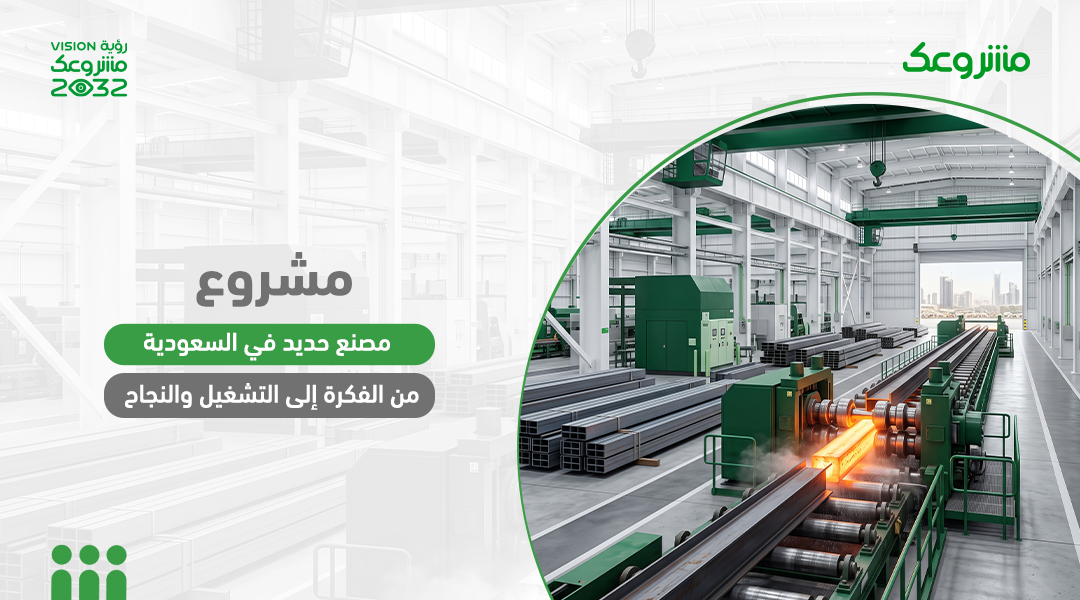
The steel factory project is one of the leading industrial ventures directly linked to urban and industrial development. Steel is an essential component in the construction of buildings, facilities, and various development projects, making demand for it closely tied to economic activity and the expansion of the construction sector. As market needs continue to diversify, investors have growing opportunities to offer steel products that meet the requirements of construction companies, factories, and various infrastructure projects.
However, turning this opportunity into a successful investment requires a clear vision that begins with identifying the target products and appropriate production capacity, followed by studying the market and competitors and determining the factory’s requirements for equipment, raw materials, and labor. It is also essential to develop an accurate overview of costs, revenues, operating mechanisms, and marketing strategies before implementation begins.
This is where the importance of integrated planning comes into play. It helps investors assess the project’s feasibility, identify growth opportunities, and establish a competitive factory capable of capitalizing on the growing demand for steel products.
The idea behind a steel factory project is to establish an industrial facility specializing in the production and manufacturing of iron and steel products used in a wide range of construction and industrial applications, such as reinforcing steel bars, steel sections, metal profiles, and other products depending on the targeted production lines.
The factory processes and prepares raw materials through a series of production stages, which may include melting or rolling, forming, and cutting, followed by inspection and quality control procedures to ensure that the products comply with the required specifications.
The project aims to meet the needs of construction companies, building and infrastructure projects, factories, and industrial entities, while allowing for product diversification based on market requirements. The project’s success also depends on selecting a suitable location, providing the appropriate equipment and production lines, and comply
The steel factory project is considered one of the most promising industrial ventures with potentially high investment returns, given the continued global demand for steel and iron ore, particularly with the expansion of the construction, infrastructure, and various industrial sectors.
According to the latest global statistics, the iron ore market was valued at approximately USD 301.56 billion in 2025. It is expected to increase from USD 313.33 billion in 2026 to approximately USD 425.52 billion by 2034, representing a compound annual growth rate (CAGR) of 3.90% over the forecast period.
Read here: Industrial Sector Report in Saudi Arabia
Investors are attracted to steel factory projects due to the importance of steel across various sectors, as well as the broad customer base and diverse applications of steel products. Some of the key factors that make the project attractive include:
Market research is one of the essential steps when planning a steel factory project, as it helps determine the level of demand for steel products, identify market trends, and assess the sectors with the greatest need for these products.
The study includes analyzing target customers, such as construction companies, factories, steel traders, and distributors, as well as examining competitors in terms of their products, prices, quality, and production capacity. It also requires identifying the most in-demand products, such as reinforcing steel bars, steel sections, pipes, and profiles, and assessing the market’s ability to absorb additional production.
It is also important to study raw material sources and costs, analyze distribution and marketing channels, and monitor changes that may affect demand and prices. Collecting and analyzing this data helps determine the appropriate project size and production capacity and identify the products that can provide the project with greater competitiveness and growth potential.
Read here: Market Research for a Project: The Foundation for Investment Planning and Selecting the Most Profitable Opportunities.
The costs of a steel factory project are divided into investment costs incurred before and during the establishment of the factory and ongoing operating costs incurred after production begins. These include:
The machinery and equipment required for a steel factory project vary depending on the type of products and production line used. However, a factory typically requires an integrated set of equipment to ensure efficient manufacturing and quality control processes. The most important include:
Read here: Risk management in projects: What is it, what is its importance, and how can it be implemented?
Read here: All the secrets to profiting from a building materials store project.
The real challenge was not growing the steel factory, but managing that growth. As demand for steel products increased in the Saudi market, I expanded production capacity, grew my customer base, and began to see clear signs of success. However, this expansion also revealed mounting financial challenges, including weak cash flows, rising liabilities and financing costs, a significant portion of capital tied up in inventory, and delays in collecting customer receivables.
As operating costs continued to rise and working capital management remained weak, a gap began to emerge between the factory’s operational needs and the available sources of financing, particularly as I sought to upgrade production lines and continue expanding. At that point, I realized that maintaining the project’s stability and supporting its continued growth required specialized intervention to reorganize its financial position and establish a stronger foundation for the next stage. That was when I turned to Mashroo3k Consulting.
The company began by assessing the factory’s financial and operational position and analyzing its liabilities, cash flows, and sources of financing. Through its financial restructuring service, it helped me reorganize my liabilities and financing sources, improve liquidity and working capital management, identify current and potential financial risks, and establish proactive measures to address them before they escalated.
The service also helped build a clearer financial vision to support expansion and development plans, improve resource utilization efficiency, enhance the quality of financial decision-making, and strengthen the factory’s readiness to secure suitable financing based on its needs and financial capabilities.
Today, the factory is more organized and financially stable, and decisions regarding expansion and development are now based on a clear and well-planned financial vision. Through this experience, I realized that the success of a project depends not only on market growth and increasing demand, but also on the ability to manage that growth efficiently from a financial perspective and maintain a balance between production, liquidity, and financial obligations.
Steel products in Saudi Arabia are subject to standards and specifications that vary depending on the type of product and its intended use. These requirements cover raw material quality and chemical composition, dimensions, measurements and weights, tensile strength, yield strength, and elongation, as well as durability and bending tests and inspections to ensure that products are free from defects that could affect their quality.
Manufacturers must also comply with the requirements of the Saudi Standards, Metrology and Quality Organization (SASO) and the relevant technical regulations, provide the required product information and labeling, and fulfill conformity requirements before placing products on the market.
A steel factory project can produce a wide range of products depending on the production lines and target market. Key products include reinforcing steel bars (rebar) used in construction and concrete reinforcement, steel sections and profiles used in structural frameworks and metal structures, as well as pipes, tubes, steel sheets, and coils used in various industrial and construction applications.
The factory may also produce bars, wires, steel mesh, and customized steel products in different dimensions and specifications to meet the needs of construction companies, factories, and various projects.
The main difference lies in the nature of the products and the manufacturing processes involved. An iron factory may focus on producing or forming iron products such as reinforcing steel bars, sections, profiles, and pipes, while a steel factory specializes in producing steel through melting, processing, and chemical composition control to achieve specific properties, followed by converting it into various products.
Steel is essentially an alloy of iron and carbon, with other elements sometimes added to enhance its properties. Therefore, steel factories may include integrated production stages that begin with raw materials or scrap and end with finished steel products, whereas an iron factory may focus on manufacturing, forming, or rolling processes, depending on the nature of its activities and the production lines used.
It is clear that a steel factory project remains an industrial opportunity with strong growth potential, particularly due to the importance of steel products across numerous vital sectors and the continued demand for them in the market. However, success does not depend solely on establishing the factory and operating its production lines; it also relies on effective planning, efficient management, product quality, the ability to understand customer needs, and the capacity to adapt to changing market conditions.
Therefore, thoroughly assessing the project’s technical, financial, and marketing aspects before implementation can support clearer investment decisions and help reduce potential risks. With a clear vision and an effective operational plan, a steel factory project can develop into a sustainable industrial business with genuine opportunities for expansion and enhanced competitiveness in the market.

To get in touch and request a feasibility study for a steel factory project
The kebab restaurant project is one of the food-service ventures that combines strong demand for grilled meals with the opportunity to target a diverse customer base, including individuals, families, and lovers of traditional Middle Eastern cuisine. With growing competition in the restaurant sector, however, the project’s success is no longer determined by food taste alone. […]
Read moreA children’s toy store project is not limited to selling toys; it is built on understanding what attracts children and what families look for when choosing products that combine entertainment and educational value. With the wide variety of educational toys, skill-development games, recreational toys, and gifts available, the store has opportunities to meet the needs […]
Read moreA residential complex project is no longer simply an investment in a collection of real estate units. It has evolved into an integrated development model that combines comfortable living, diverse services, and long-term investment value. As cities expand and residents’ needs evolve, demand is growing for residential complexes that offer a comprehensive environment suited to […]
Read moreThe veterinary clinic project comes at a time when animal care is no longer limited to treating illnesses or injuries, but has expanded to include health monitoring, vaccinations, routine checkups, and care for both pets and livestock. However, many animal owners face challenges in accessing specialized veterinary services that combine prompt response, high-quality care, and […]
Read more
خصم 25% على خدمات مشروعك استفد من العرض الآن، فالفرصة متاحة لفترة محدودة فقط
سجّل بياناتك واحصل على خصم 25% الآن


