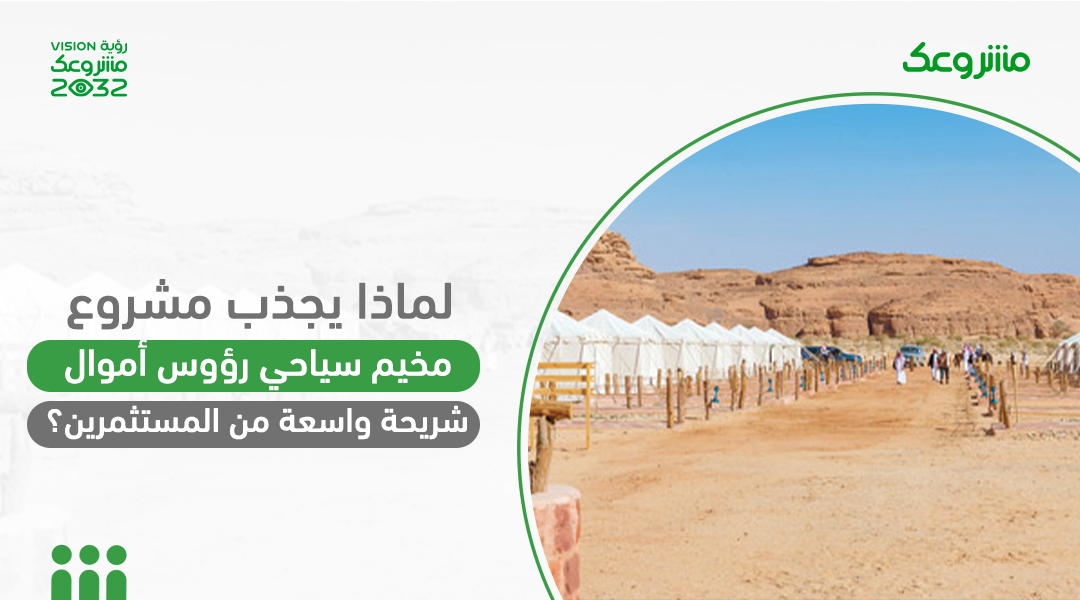
The Tourist Camping Project has become one of the most promising investment ideas, attracting attention as domestic tourism grows and demand increases for unique accommodation experiences that combine comfort, nature, and privacy. Visitors are no longer looking only for traditional hotels; they increasingly seek comprehensive experiences that allow them to enjoy natural surroundings, participate in recreational activities, and spend memorable time with family and friends.
This highlights the importance of establishing a tourist camping facility designed to meet visitors’ needs, featuring comfortable accommodation units, a variety of services, and amenities that ensure a high-quality experience. This type of project also offers opportunities to diversify revenue streams through accommodation, activities, and additional services, particularly when the location is carefully selected and the target audience is well understood.
With proper planning, market and competitor analysis, and a clear assessment of the required costs and facilities, a tourist camping concept can be transformed into a well-structured investment venture with the potential for growth and expansion.
Read here: Best Entertainment Business Ideas That Generate Sustainable Profits
A tourist camping project is a recreational and tourism facility that offers a unique accommodation experience combining relaxation, nature, and leisure activities in an environment designed to welcome visitors and tourists. The project involves establishing suitable accommodation units, such as upgraded tents or cabins, and providing essential facilities and services to ensure guests’ comfort, alongside organizing activities and experiences suited to the location, such as desert excursions, outdoor gatherings, camping, sightseeing, and exploration.
The project can appeal to a diverse range of customers, including tourists, families, adventure enthusiasts, and travelers seeking unconventional tourism experiences. It can also be developed by adding restaurants, cafés, recreational activities, and supporting services, enhancing its appeal and creating multiple revenue streams.
Read here: Tourist resort project, your golden opportunity to achieve the highest profits
Yes, a tourist camping project is considered a promising investment opportunity, supported by the continued growth of the global luxury camping market and increasing demand for accommodation experiences that combine nature and comfort. According to the latest statistics, it reached… Luxury Camping Market Value The global market was valued at approximately USD 3.71 billion in 2025 and is projected to grow to USD 4.07 billion in 2026, before reaching around USD 9.15 billion by 2034. This represents a compound annual growth rate (CAGR) of 10.67% over the period from 2026 to 2034, reflecting growing demand for luxury tourism and camping experiences and supporting growth opportunities for projects that offer distinctive, comprehensive tourism experiences.
Read here: Entertainment Market Report in the Kingdom of Saudi Arabia
Market analysis for a tourist camping project in the Kingdom of Saudi Arabia involves assessing demand for diverse accommodation and recreational experiences, particularly as interest in domestic tourism and nature-based activities continues to grow. The project can target various customer segments, including families, young adults, groups, and tourists seeking relaxation and outdoor activities.
Competition includes tourist camps, chalets, private leisure retreats, and similar accommodation facilities, making a distinctive location, high-quality facilities, and a diverse range of services among the most important competitive advantages. Demand is also influenced by tourism seasons, holidays, and events, which can be leveraged to increase bookings through suitable offers and packages.
The nature of the project also allows for diversified revenue streams through accommodation, recreational activities, restaurants, cafés, and additional services, with opportunities for future expansion through new accommodation units and facilities. Digital marketing remains an essential tool for reaching customers and showcasing the camp’s unique experience. However, competitors, costs, and the regulatory requirements governing the activity should be carefully assessed before implementation.
The costs of a tourist camping project in Saudi Arabia are calculated by identifying the investment and operating expenses required to establish and run the project, taking into account the camp’s location, the number of accommodation units, the level of facilities, and the intended classification. The main cost items include:
A feasibility study helps reduce the risks associated with a tourist camping project by evaluating its viability before capital is invested and identifying the factors that could affect its success and profitability. This is achieved through:
Read here: Feasibility Study – Its Importance, How to Prepare It, and How to Conduct a Feasibility Study
Achieving sustainable profits from a tourist camping project depends not only on increasing bookings, but also on building an operational model that balances occupancy rates, diversified revenue streams, cost control, and visitor experience quality. This can be achieved through the following strategies:
Read More: How Can You Generate Attractive Profits from a Children’s Amusement Park Project in Saudi Arabia?
My journey with a tourist camping project began with my passion for nature and my desire to offer a unique accommodation experience that combines comfort with the enjoyment of the outdoors. Over time, I was able to build a loyal customer base and began noticing an increase in visitor numbers and repeat bookings, confirming that the project had genuine growth potential in the Saudi market. As demand grew, I realized that the camp’s existing capacity was no longer sufficient to capitalize on the available opportunities. Expansion became necessary, including adding new accommodation units, upgrading facilities, and diversifying the activities and services offered to visitors. However, securing the funding needed to implement the expansion plan was one of the biggest challenges I faced. I came to understand that operational success does not necessarily mean that moving into the next stage of growth will be easy.
I therefore turned to Mashroo3k Consulting Services, whose team helped me assess the project’s current position, identify its expansion needs, evaluate its financial and operational capabilities, and prepare a comprehensive financing proposal that clearly and systematically presented the project’s feasibility and growth opportunities. With this support, I was able to secure financing from the Social Development Bank, enabling me to implement the development plan I had envisioned. I began adding new accommodation units, improving facilities, and upgrading services and activities, which enhanced the visitor experience and enabled the camp to attract a broader range of customers. By the time the development phases were complete, the project had become better organized, more competitive, and better positioned to generate sustainable revenue. My experience has reinforced my belief that sound planning, combined with appropriate financing, can transform a successful project into an investment opportunity with the potential for growth and expansion.
A tourist camping project requires a comprehensive range of services to ensure visitors’ comfort and provide a distinctive tourism experience. These include accommodation in fully equipped units, cleaning facilities and restrooms, outdoor seating areas, restaurants, cafés, and food services. The project can also offer recreational and sports activities, seasonal events, booking and reception services, customer support, parking facilities, security and safety services, and regular cleaning and maintenance. These services help ensure efficient operations and maintain visitor satisfaction.
The essential facilities and equipment for a tourist camping project include furnished accommodation units with all necessary amenities, outdoor seating areas, shaded spaces, and relaxation zones, as well as restrooms and sanitary facilities. The project also requires electricity, water, drainage, and lighting systems, along with a reception and administration area, parking facilities, and spaces for recreational activities and events. In addition, cleaning and maintenance equipment, security and safety systems, fire protection equipment, and communication and internet services should be provided to ensure visitor comfort and efficient camp operations.
A tourist camp differs from a traditional campsite in its intended use, level of facilities, and range of services. A tourist camp is designed to provide visitors with a comprehensive accommodation and recreational experience, typically featuring fully equipped accommodation units, service facilities, recreational activities, reception services, cleaning, and security and safety measures.
In contrast, a traditional campsite generally relies on basic facilities for temporary accommodation and simple outdoor activities. Tourist camps also place greater emphasis on visitor experience, marketing, booking management, and operational efficiency, whereas traditional campsites tend to offer more basic facilities and services and serve simpler purposes.
Periods of moderate and cooler weather are generally among the best times to operate tourist camps in the Kingdom of Saudi Arabia, as the conditions are more suitable for outdoor activities and enjoying nature. Demand also typically increases during school holidays and public holidays due to the rise in family trips and recreational outings.
Tourism seasons and events across different regions of the Kingdom can also be leveraged by offering packages and promotions tailored to specific events. During periods of lower demand, bookings can be encouraged through promotional offers and activities and services suited to the weather. These strategies can help maintain more stable operations throughout the year.
Amid the rapid development of the tourism sector in the Kingdom of Saudi Arabia, a Tourist Camping Project stands out as an investment opportunity that combines offering a unique accommodation experience with capitalizing on the Kingdom’s diverse destinations and natural landscapes. The project’s success depends not only on providing accommodation, but also on the investor’s ability to deliver a comprehensive experience, beginning with selecting the right location and extending to the quality of facilities, services, and activities offered to visitors. With careful planning, a thorough understanding of market needs, and an effective operational and marketing strategy, the camp can become a preferred destination for those seeking relaxation and entertainment. Therefore, conducting a comprehensive feasibility study before implementation is an essential step in transforming the concept into a viable investment with the potential for growth and sustainable returns in the Saudi tourism market.

Contact us to request a feasibility study for a tourist camping project
The kebab restaurant project is one of the food-service ventures that combines strong demand for grilled meals with the opportunity to target a diverse customer base, including individuals, families, and lovers of traditional Middle Eastern cuisine. With growing competition in the restaurant sector, however, the project’s success is no longer determined by food taste alone. […]
Read moreA children’s toy store project is not limited to selling toys; it is built on understanding what attracts children and what families look for when choosing products that combine entertainment and educational value. With the wide variety of educational toys, skill-development games, recreational toys, and gifts available, the store has opportunities to meet the needs […]
Read moreA residential complex project is no longer simply an investment in a collection of real estate units. It has evolved into an integrated development model that combines comfortable living, diverse services, and long-term investment value. As cities expand and residents’ needs evolve, demand is growing for residential complexes that offer a comprehensive environment suited to […]
Read moreThe veterinary clinic project comes at a time when animal care is no longer limited to treating illnesses or injuries, but has expanded to include health monitoring, vaccinations, routine checkups, and care for both pets and livestock. However, many animal owners face challenges in accessing specialized veterinary services that combine prompt response, high-quality care, and […]
Read more
خصم 25% على خدمات مشروعك استفد من العرض الآن، فالفرصة متاحة لفترة محدودة فقط
سجّل بياناتك واحصل على خصم 25% الآن


